Coffee Talk

In the tradition of the different Biblical perspectives of Jesus and the continued tradition of the saints who have gone before me, I’m writing about where I think Jesus lives today. I’m writing about where I find Christ shine through most in the world, through the vulnerable, through society’s “least of these” lens, through people who have gone through hell for being truthful and loving to themselves in spite of the world’s hatred for them. I want to thank Matthew, Mark, Luke, John, and Paul for their varied depictions of Christ, of their differing perspectives and their differing opinions of Christ. I want to thank all of those whom I have read or encountered who have helped me see Christ differently and therefore have drawn me closer to the Christ found in Scripture and to the Christ found in all of creation: Paul Young, Katherine Sakenfeld, Edwina Sandys, Kwok Pui Lan, John Howard Yoder, Alice Walker, Katie Manning, Jeff Eaton, and Ruth Huston.

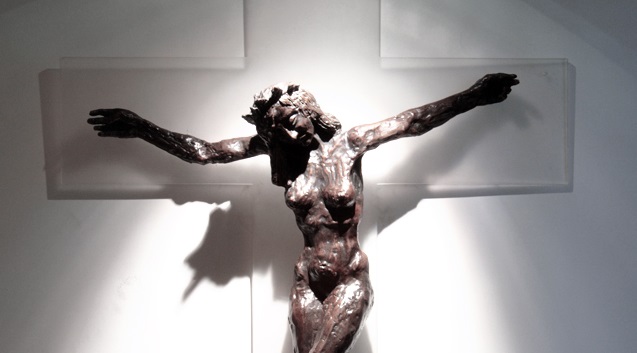
I met Jesus at a quaint indie coffee shop in the burbs yesterday. She looked so out of place. I loved it and hated it. I felt uncomfortable by her presence and so overwhelmed by her beauty, her love for herself, her daringness to meet me in my own comfortability. I felt ashamed. Why couldn’t I travel to her side of the tracks? My own damn white middle-class privilege keeps me from meeting Jesus where she feels most comfortable. Damnit. Next time. Next time I’ll go find her and stop making her meet me on my turf.

“Hi darlin’,” she says to me and smiles over her coffee.

“Hi Jesus,” I smile at her dark skin, her chocolate brown eyes, and her strong jawline. She is the most beautiful human I have ever laid eyes on.

The white couple sitting next to us look uncomfortable. I can’t decide if they’re more uncomfortable by her blackness or her transness.

She’s growing her hair out in a big afro. It’s divine.

“Girl, stop staring”

“Sorry, Jesus. Your hair is simply amazing.”

“Why thank you,” she puffs up the bottom of her afro with a proud look on her face. “But that doesn’t get you off the hook.”

“What hook?” I ask, guiltily.

“For not coming to my home today.”

I look down, ashamed. “I know.”

“And don’t you be playing the victim, here. You know you aren’t the victim. Get your head up.”

I look up and stare her straight in the eyes. She’s smiling, but her hard eyes tell me she’s not having one bit of the pity party I’m throwing for myself.

“Okay,” I say, not sure what topic to broach first.

“How’s the transition going?” I ask, hoping I’m not being too invasive.

“It’s going. Most people don’t question me anymore. I had some woman the other day ask if I was a man or a woman. I told her I was a woman, but that it wasn’t any of her damn business. She looked like she didn’t believe me. So I asked her if she wanted to see my lady bits.”

I gasped and laughed at the same time, “No?!”

“Oh yes. Respectable people,” she does air quotes around respectable, “want to control your every move, but are scandalized when you call them out on it. They’d rather keep people down, keep you underneath and behind them than acknowledge your equalness, but they want to do it in a subtle way. They don’t want to seem like an outright racist or bigot. They don’t understand they’re caught in a system that encourages them to be so.”

“I know, I’m sorry.”

“I don’t want your apologies, mister. I want your heart and your mind and your actions to be different. I want you to stand up for me and for my people.”

I feel myself bristle at her term ‘my people,’ offended and sad she doesn’t include me in ‘her people.’

“Oh, stop it.” She snips.

“Stop what?” I ask defensively, trying to hide the emotions on my face. She can see right through me.

“Feeling sorry for yourself. You know you’re my people, too. But, you also know I’ll always take the side of the oppressed, of the ones who aren’t protected by society, by the laws of the land, by the Church, which by the way is supposed to follow after me. But, somehow, they keep moving out and building buildings away from all the people I’ve chosen to surround myself with. And you know, sometimes you’re the one I’m defending, but usually I’m having to defend others against you, you know that.”

“I’m trying to know that and I’m trying to change that.”
She softens a bit, “I know that, honey. But, you still have a long way to go.”

“I know,” I say, trying to not throw a pity party for myself, but also trying to feel rightfully repentant for my actions, but mostly for my silence and non-action in the all moments I should have spoken up and done something.

“Girl, let’s go for a walk and get out of this,” she looks around eyeing all the people staring at her like she doesn’t belong, ”place. Let’s hear the birds talk to us and see the trees waving back.”

I smile. I love the way Jesus talks about the birds and the trees, like they’ve got hearts and souls they’re trying to share with us.

“Sounds good,” I smile as we trade the stuffy coffee shop for the refreshing breeze and blue sky.

Photo above is the sculpture Christa by Edwina Sandys.

On Talking to Plants and Writing a Book

Sometimes, I talk to our plants.

There, I said it. I know, I’m weird. But, I can’t help it. I love our plants. I love talking to our plants, encouraging them to grow. It is scientifically proven that plants do better when talked to, when we give them our carbon dioxide in soothing, encouraging tones. I tell them, “You’re doing so good.” “Look at you!” “You’re growing so well. Keep up the good work.” “I love you.”

We have four plants. I’ve already killed two, but I saved a leaf from one of the succulents and replanted it. It’s actually growing a root! So, technically, I’ve only killed one plant so far. I had no idea how to care for it and could not figure it out. The other one, I watered too much. That’s one of the easiest ways to kill plants, especially succulents. But, it’s regenerating. The bamboo plants are shooting up taller than I had expected. They’ve bounced back quite nicely since the move and the aloe plant is doing great.

A few days ago, I saw new growth on another succulent and I got so excited. I took it to Reed and shoved it in his face. “Look! It’s growing where the dead leaves had fallen off!” I said excitedly. I love watching the plants grow. I love watching growth and birth and newness happen in the things I am taking care of. It’s magical. Watching life grow and become new and more beautiful is pure magic for me.

And speaking of birthing new things, I’m attempting to write a novel. Ideas keep shooting up in me like our bamboo plants, growing in me until I write them down because they’re bubbling up and over the sides. I keep procrastinating, doing other things thinking that I can’t actually write a book. But, this is me saying it out loud (virtually out loud, at least). I’m working on a book. I’m making myself sit down and write…also because I love writing. I’ve always loved it and now I’m claiming it. I’m not sure if I’m claiming the label of a writer, yet. (I’ll get there someday, even though deep down I think I know I am.)

Elizabeth Gilbert writes in Big Magic that inspiration strikes and if we don’t take hold of an idea and partner with it to birth it, the idea will move on to someone else. I’m making this post my official partnership contract with this idea. I will write this novel. It may not be that good and it may not ever make it into people’s hands, but I have to give it my best shot. I have to submit myself to the whims of inspiration and see where she takes me. So, if you (the reader) will join me in this process, I welcome you along. As it takes shape, I’ll give you a bit more. But, for now, know that it’s a love story (because I know nothing more compelling than love, be it romantic, familial, or friendship).

So, in the spirit of how I care for the plants, I am going to attempt to care for myself and this story. I’m going to encourage myself and this story to grow together. I’m going to feed it with time spent in front of the computer writing. I’m going to nourish it with planning sessions, notebooks and paper filled with names and charts and maps of the story I’m trying to tell. I’m going to grow it with friendship and openness and vulnerability and most of all, love.

The Dark Ferret Society: Friendship, Family, and the Importance of Fighting Injustice

The past few days I have found my thoughts growing darker and darker as Trump continues to win primaries and people continue to cling to their racism instead of giving it up for a chance at a better home for future generations. I stock shelves thinking the world is going up in flames, that some people like to watch the world burn (and not the good kind of Bern). Then, when I feel most hopeless, I remember that my friend Emily wrote a book! A book filled with mystery and adventure. A book filled with friendship and family. A book filled with injustice and the teenagers who right the scales of injustice through mischief, through pranks, through targeting those at the source of the injustice.

Friends, Emily Humpherys (who also blogs regularly at www.emilyhumpherys.com) wrote a book called The Dark Ferret Society and it’s for purchase right now on Amazon. Here’s the link:The Dark Ferret Society. Go buy it right now because it’s truly delightful! I had the privilege to read and review it before it was published.

The Dark Ferret Society is a coming-of-age story about a redheaded (my kinda family) girl by the name of Ruby Fink (great name, right?). Ruby’s the daughter of famous photographer, Frank Fink, and that means they move on a regular basis, going wherever Frank’s work takes him. Therefore, Ruby’s family is grounded in rituals, routines that bind them to each other and their temporary homes as opposed to a particular location or town. Each new house means a new dining room table, a new school, new people that Ruby barely comes to call friends, until she attends Desert Academy in Snowflake, Arizona and that all changes.

Over the course of her time at Desert Academy, Ruby is initiated into The Dark Ferret Society. The DFS is a secret group at the high school who prank both the school and specific individuals. The nature of the pranks are to right the wrongs that have occurred at Desert Academy, to bring justice to the students who are picked on and to the teachers who are tormented by wealthy students who can get away with anything.

The book is full of secrets, adventure is around every corner, and whimsy is throughout. It wouldn’t be an Emily Humpherys novel without whimsical characters, without hilarious pranks, without the love that binds friends and family together. This YA novel will warm your heart while making you shout in surprise (and often in outrage, too) at every twist and turn. If you’re looking for the next best book to read, look no further: The Dark Ferret Society is just for you (or your kids)(or both!).

This quote is taken from the beginning of the book and gives you a taste of the ritual, of the adventure, of the Ruby Fink I have come to know and love:

“Ruby Fink sat on a bench across the street from Desert Academy writing on her canvas tennis shoes. Ruby considered herself a professional at beginnings, so much so that she started all of her first days the same. She brushed a strand of her long, red hair away from her face as she inked Snowflake, Arizona in an arc near Copenhagen, Denmark and Istanbul, Turkey on her left shoe. She didn’t remember when she started turning her favorite pair of tennis shoes into a passport, but the Shoe Tradition was important. This way, every place she lived traveled with her, every place her parents dared to call home collected on her feet…Ruby took a deep breath and whispered “Geronimo!” to herself as she stepped over the sidewalk and onto school grounds.”

May you take a deep breath and whisper “Geronimo!” as you step into adventure and into Ruby’s trusty, traveled shoes.