Spring is for Wishes

I have taken to calling the white dandelion puffs that pop up all around the country in yards and parks “wishes.” You know, when you try and blow all the little seedlings off at once you’re supposed to make a wish, and if you blow all of them off at once, that wish will come true, of course! So, since you make a wish for them, I now just call them “wishes.” We go to the park and I say, “Look at all the wishes!” with a big smile on my face and excitement in my eyes or “They’re mowing down all the wishes!”, sadness weaving its way through my voice. My husband laughs at me and then when I’m at work sends me a picture of wishes still alive at the park and beneath it he says, “And look, there are still wishes after the mowing yesterday.” He knows me well and the things that bring me joy.

Most homeowners find these little puffs of fun and hope and laughter to be nuisances. They call them weeds and spray their yards with weed killer so they don’t have to deal with them. Me, I’d deal with them all day, blowing like I’m blowing out a million birthday candles making wishes left and right. Wish can often sounds like a light and fluffy word. But, if it makes you feel better or more comfortable or feel like my words have more weight, just read prayer or hope in place of wish. That’s essentially what I’m doing when I make a wish. I’m praying for a friend’s cancer to go into remission. I’m hoping for a world where children don’t die of starvation. I’m hoping for goodness and light in my relationship with Reed or I’m praying for our country to get its shit together and stop being so hateful.

Spring has sprung and it has brought us wishes by the thousands and millions. Spring is when the death of winter has come back to life. For Christians, we celebrate this through Easter, the rising of Christ from the dead. We believe that new life can burst forth where death had previously been. Joy and happiness can burst forth out of depression. Love can be born out of hate. Easter is the hope that not all will end in disaster, that the world won’t burn to the ground around us. It’s the hope that we can have lasting peace, that people can some day learn to get along. It’s the hope that we can set our differences aside long enough to see that we’re all just humans trying to be loved in a world that sometimes offers so little love. It’s the hope that we can see each other for who we really are.

Spring is bursting forth all around us here in Illinois. Birds are chirping every morning when I leave for work and the leaves are coming out in droves. A few days ago, I stood underneath a tree we were walking under at the park and looked up. “Look!,” I said, “It’s full of leaves. It’s so green! And it’s so shady under here!” Friends, I pray, hope, wish for us to marvel at the newness, to look for the hope when it all feels so bleak. I will keep making wishes for all of us to feel spring in our hearts and minds and bodies, to be bursting to the brim with goodness and peace and most of all, love. I wish love upon each and everyone of you: love for yourself, love for your family and friends, and love for those you don’t know and those you don’t like. May you hope and pray for goodness and love when you see wishes popping up in your front yard and at the park when you’re hanging out or having a picnic. When life feels hopeless, remember to pick up some wishes and blow with all your might. For wishes born of love and hope have such a good chance of being carried by the wind and planted in the place they ought to be.
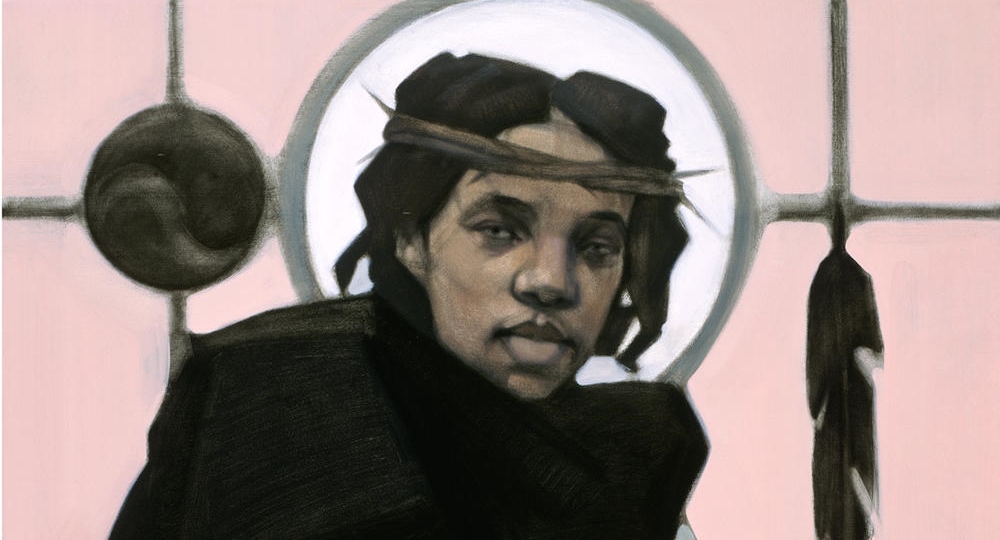
On Being Wrong and Jesus

In my last blog post, I wrote about having a conversation with Jesus, a black, trans, woman Jesus. She was bold, beautiful, and unapologetic, because that’s who Jesus was and is and will continue to be. Throughout the past few years, I’ve been going through a lot of theological overhaul of the Gospel I grew up with. When we are young, our understanding of God and of faith and of the world don’t mesh as we grow up. Our understandings become more complex. They take on a dimension and depth with which we could not comprehend in our small years of life on earth. With that said, I also realize that my understanding of faith and God and the world will probably evolve over the next fifty years of my life and I will look back on this time and think I was so simplistic, so naive in my worldview. But, I have what I have right now and that’s what I’m working with.

Over the course of twenty-five years of life, I have come to find that being wrong is a normal part of life, no matter how much we hate it or attempt to evade it. I have spent my fair share attempting to never be wrong, and when I was, to admit it without admitting it. I would like to think that I have come to a place where I can admit I’m wrong fairly easily. But, as my husband has pointed out many times, it takes a lot of effort to prove me wrong. Our relationship has a little too much of me saying, “Hmmm,” and him pulling out his phone to look it up. I’m a natural skeptic, what can I say!? I’ve grown this way out of self-preservation. My sister once (actually, every other week of my childhood) told me I’d get my period some day because even boys have periods. My brother once told me I had an older brother who had drank the chemicals under the sink and died before I was born (This was utterly untrue). They all woke me in the middle of the night when they’d gotten home from a night on the small, small town we grew up in and told me I was late to go fishing with my dad. I frantically threw clothes on before looking at the clock and realizing I had another four hours of sleep. All of this is to say that I now need it proved to me before I admit I’m wrong, and then I’ll gladly admit it. But until then, I’ll not believe a word. Because family.

But also because education. When I learned that Jesus wasn’t white, I was shocked! When I learned God wasn’t a man, it felt like a dream come true! When I finally believed that the universe was billions of years old, my understanding of God grew exponentially. When I learned how to read the Protestant Bible as a collection of 66 books written most likely by all men a long, long time ago, it dramatically shaped my view of my faith in the best way possible. It became more complex, more nuanced, filled with a richness I had yet to know in my faith. All of my learning to let go of the wrong things I grew to know as a child was freeing, exhilarating, and incredibly frustrating. I so wanted to cling to what I knew, to the thought that I was right and had it all figured out. But what wrongness and approaching life without knowing all the answers can teach us most is humility.

All of this learning to be wrong inspired my last post. My faith has taught me that Jesus shows up to the world in its least likely places, in the places where oppression is fiercest or where it is most insidiously subtle. The Scripture surrounding Jesus portrays him as a Jewish male who is attempting to overthrow the Roman Empire with the Kingdom of God. Jesus is part of an oppressed group of people forced to pay taxes and homage to the Empire and to be subject to their ruling. As much as Jesus is for life and enjoying it to the fullest, he was also against those who would take life away from others. Jesus opposed oppressive forces in his day.

My reading of Jesus in Scripture begs me to see Jesus in our society today. It begs me to understand the forces that are at work all around me, both life-giving forces and oppressive ones. It makes me dig deeper into myself to find where I fall in both of those categories because we most often fall in both categories to some extent. This is when I find that Jesus would show up today and look very different from me. I am a white, cisgendered (meaning my self-identification as a male matches my biological sex), middle-class male. Besides the fact that I am gay, I sit pretty high on the ladder of privilege in our society. And on the topic of gayness, being a white, cisgendered, male is still unfortunately the highest rung on the ladder of privilege in the gay community.

I find that Jesus would not look like me, would not sound like me, dress like me, or express herself like me. Jesus does not have to be a man to save us. Jesus could show up in a woman’s body and save us just the same. She would be loving and self-sacrificing and yet angered by injustice and refuse to sit down and shut up. She would chant that black lives matter, because they do. Not because they matter more than white lives, but because Jesus would demand that they have a seat at the table just like everyone else. She would be demanding gender neutral bathrooms so that trans people could feel safe and loved and included in society. She would be railing against any law that allowed religious groups to refuse service to lgbtq folk. She would be outraged by any system calling for the registering of Muslims in the U.S. Jesus would be in our midst loving us in her fiercest way possible to change for the better. Jesus rarely talks about easy stuff in the Gospels and I imagine if Jesus came today, she would be just as radical, just as political, just as sharp and witty and full of love as he is in our Gospel accounts in Scripture. Jesus brings the Good News. And the Good News for me is that sometimes it’s good to grow up and find out I was wrong. And it’s good to fight for those with less privilege and rights than me, for that’s what Jesus would do. That’s the Jesus I find in Scripture and that’s the Jesus I find when I look in the eyes of people who are different from me.