Gay and Christian [Falling in Love]

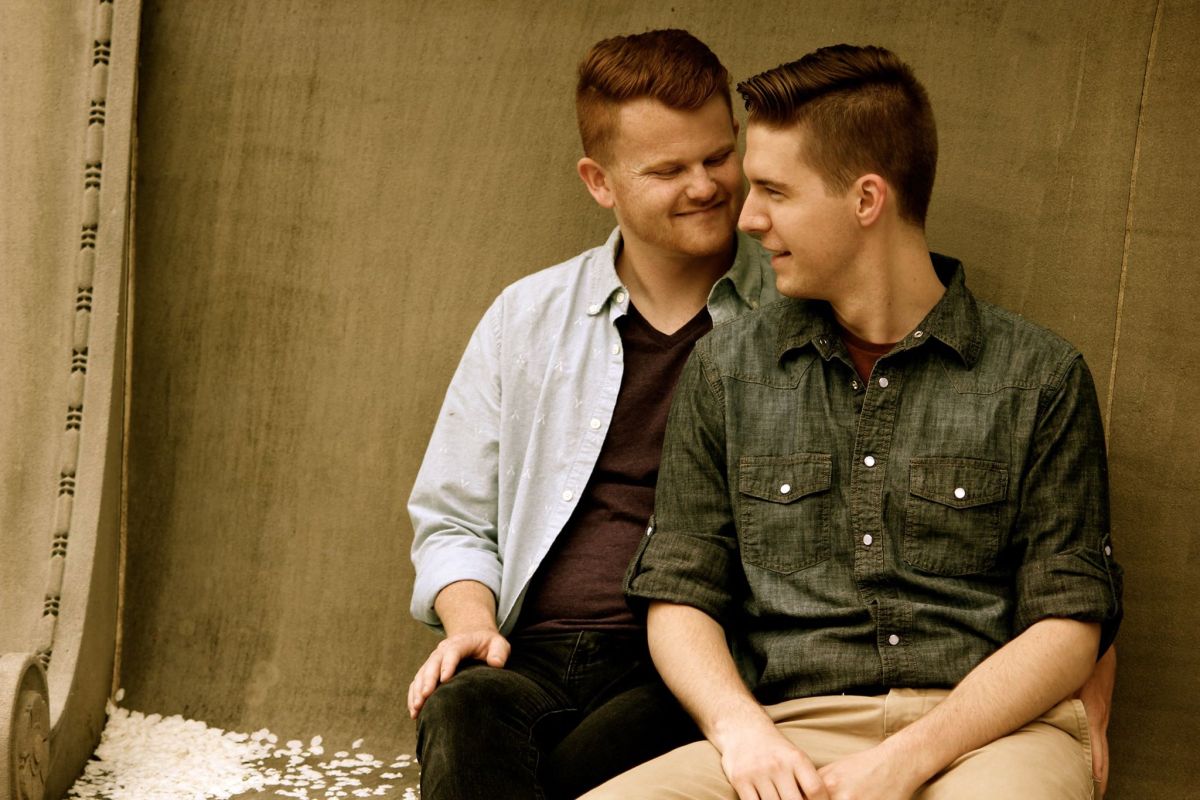
When I fell in love, it didn’t happen in one fell swoop. It took three years of a deepening friendship and numerous people asking if we were interested in each other for the eyes of my heart to open. And when they did, it was a floodgate that opened. I fell hard, and it took me at least two months before I could admit to myself what was happening. At first, I would berate myself for thinking of my best friend in that way, but eventually I learned to accept it, to embrace it, no matter how weird it seemed. Then at some point senior year of college I was able to admit it to myself, to say, “I like him. And it hurts so bad that no one knows.” So, I told one of my best friends at the time, and she could hardly handle her excitement and not freak out at the same time. I cautiously began opening myself up to a few other trusted friends during that time and told them that I liked my best friend and not soon enough, I told him on a chilly February night on our way back from our regular shopping trip/doing homework at Starbucks routine that we had come to love that year. (Basically, we were going on dates before we were going on dates.)

At that time, he told me that he didn’t like me, but that nothing would change about our friendship. And it didn’t. It was wonderful, and it led him down the path of questioning whether or not he liked me, which he found that he did and that he couldn’t imagine his life without me. We started dating the summer after college, right before I went to seminary in New Jersey. He spent the summer in Colorado and then Bolivia. We saw each other only a few times after we started dating before I moved to NJ.  We delved right into a long distance relationship. I don’t think we could have managed it if we hadn’t had four years of friendship under our belts.

That first year of our relationship, though, was magical. He’d come visit me in Princeton, or I’d visit him in Illinois, and we’d get to hang out, play games, talk about life and bask in being in each other’s presence. Oh, and we’d make out like crazy.  Our mental/emotional relationship was growing steadily over phone conversations, texting, and skyping, but our physical relationship had to grow in spurts when we saw each other, attempting to catch up for the all the time our hearts and minds were growing closer to one another, but our bodies weren’t. It was a dizzying time, falling in love and learning about another person’s body.

Beginning my seminary journey in the midst of my first relationship changed the way I viewed life, theology, God, the Church, the way we’re supposed to be as Christians. Looking back, I can see a continuation from college concerning my theological education. I continued to take an interest in the Old Testament, wrapping myself up in the rich stories like a blanket on a bonfire night in late October. I wanted to learn the stories, learn the meaning of the stories, and figure out how they are stories that transcend time (usually, but not always). In falling in love with the Old Testament and falling in love with another man, I found the two to make sense together. The Old Testament is a lot about body, a lot about feeling our bodies and viscerally responding to God and to our situations through bodily actions. The Old Testament contains less piety than the New Testament; the people in the OT often only deny themselves, their bodies, of sustenance and nourishment when there is a point to be made. They rip their clothes and cry out when richer, bigger nations are marching on their borders. They are full of life, of party, of vitality that I find lacking in the NT (besides Jesus’ parties, of course.)

In falling in love with the OT and my future husband, I found myself using the name ‘God’ more than the name ‘Jesus’ while praying. I found myself speaking less about a personal relationship with Jesus and more about loving God and loving others (and this eventually came to mean other humans and animals and the earth). I found my evangelical tendencies slipping, becoming less pronounced. There used to be a time in high school and a part of college when I had come back to faith where I’d talk about Jesus almost as a lover, “lover of my soul,” etc. Now I look back on it and realize that through my faith and my friendships with girls, I had been looking for a significant other. I had been yearning for someone to share my whole self with; body, mind, and heart. I deeply needed to be known and to know, and in part, I sought this through my faith. I sought this through believing that Jesus lived in my heart and that He knew me unlike anyone else.

Granted, I still believe God knows me in a way that I cannot even know myself (I think? Maybe not.) And my theology has been shaped by a knowledge that God enters into friendship with us, that Jesus chose to be friends with humans, as well as the animals and the earth. So, a part of me experiences friendship with God, but more of me experiences awe, incomprehensibility, and wholly otherness when I think about God. I cannot fathom the Creator of all that is. I cannot understand the righteousness, the pure love God has for all  of us when I so easily dislike people and am disgusted with the way humans often behave (including myself at times). I cannot understand the benevolence of an Artist that paints such stunning sunsets and sunrises for those able to appreciate them. I cannot understand the sheer love of an Entity that would allow freedom of choice when it far too often results in pain for someone or something else. I cannot understand a God who would love me just as much as Donald Trump (because clearly I believe I’m a saint in comparison). God is more unfathomable than the darkest depths of the sea and the greatest galaxies of the universe.

And now that I’m in an intimate relationship with another human, my faith has shifted to fit my understanding of life. It doesn’t mean God is any different, but the ways in which I need God are different, the ways in which I experience God are different. Because of the love that I feel for my husband and the love that we grew over four years of friendship and four years of dating before marriage I can understand better the ways in which God might love that which God has created. The love between two people is complex, filled with easy love and difficult love. It is filled with love that bubbles to the surface when looking into one another’s eyes and it is filled with love that is chosen when there is frustration, annoyance, and hurt. Being in love with and choosing to love another person has so shaped my relationship to God that I cannot help but be both in awe and grateful for the love that God has and the love that God chooses for the whole of creation.

Gay and Christian [Kissing Another Boy]

Kissing a boy for the first time was electric, magic, divine. Kissing a boy told me that I was certainly gay. Kissing a boy told me that all I ever wanted out of a love life was to kiss another man for the rest of my life (granted, it still took me a year or two after my first boy-kiss to fully accept my sexuality). Kissing a boy opened up a world that had only ever existed in my mind. Kissing a boy showed me that God had made me good, like in the beginning kind of good. Kissing a boy for the first time at the age of nineteen made all of it worth the wait. Kissing a boy made kissing a girl pale in comparison, and it had nothing to do with the particular girl I kissed and everything to do with the fact that she was a girl and I was a boy who was insanely attracted to other boys.

I remember the night it happened, some parts fuzzy, but most parts clear as day. I remember the hand in my pocket, the excitement of what it could possibly mean and what would ensue.  I can distinctly feel his gaze on me when I wasn’t looking; it was his give-away. The gaze is always the give-away with a gay man. I wasn’t experienced in boys, in dating, in going out with friends and finding someone that I might end the night with. At that age, I didn’t know that the guy was gay, but I thought he might be, and soon learned it when his hand snaked its way around my waist. I didn’t know what would happen, where things would go. It was all too exciting.

I remember the first embrace, the first kiss, the feeling of two bodies next to one another that ached for the touch of another boy. It was magical and it was dizzying and it was electrifying. It was everything a first kiss with someone of the same-sex should be for any gay person who had waited nineteen years to experience it. The night that I first kissed a boy will be forever etched into my mind, forever a pact with myself deep down that boys were the right answer. That night went by in a whirl. It all happened so quickly and yet we stayed up into the early morning hours exploring our bodies and kissing until our lips were sore. But as he fell asleep, I found myself coming out of my stupor. Whether it was God or my conscience or my conservative upbringing, I became utterly aware that I had messed around with someone I had met that same evening. I didn’t know this person. I didn’t have a relationship with him, and this sent off warning signals in my head.

I sometimes think these warning signals were a detriment to me, and yet for the most part, they were exactly what I needed. I enveloped myself in study of my faith, in growing my knowledge of God, of Scripture, of what it means for humans to love. I explored my sexual ethic, my ethic of war, my ethic of eating and the way I treated my body, who Jesus is and who Scripture claims Jesus is. I explored myself, learning more and more about the person I was and the person I was becoming. Who knew that the act of kissing another boy could explode in me a ferocious hunger to know myself, to know the world, and to know God? Who knew that the act of kissing another boy would lead me to Seminary, lead me to desire God more, even in the midst of liking that I kissed a boy?

Sophomore and Junior year happened quickly for me. I busied myself with classes and jobs and planning collegiate events. I spent a lot of time talking with friends, discovering myself in the context of loving community. I found that the more I grew to know myself, the more I found that I liked myself, that I loved myself and that myself, as a gay man, was acceptable. It wasn’t quite in college that I came to love myself for my sexuality, but I came to a place of loving myself in spite of my sexuality. It’s a big difference, but Seminary helped me transition from the ‘in spite of’ to the ‘because of.’

The boy that I first kissed asked me out on a date after our first encounter, but I declined and made some excuse about not being ready. In all reality, I wasn’t ready. I didn’t know a damn thing about being in a relationship or about toting my sexuality around in the form of another human attached by the hand. I wasn’t ready to be ‘out.’ I wasn’t ready to admit it and claim it and live it and broadcast it. Granted, I don’t know if we LGBTQ folk are ever fully ready to engage the world head on when so much of the world still doesn’t even want to tolerate us. But we do it in the name of love and we do it for those less able to be out. A part of me regrets turning him down. I wonder how much I would have learned from that experience, how much I might have grown from being thrown into that world a year or two sooner. I shudder to think how I would have navigated that and being in leadership at a college where the administration wouldn’t condone it. But, a part of me doesn’t regret it and I know that regardless, I learned those things in time. I learned them as I became ready to learn them. I began stepping out of the closet one toe at a time, and eventually I saw the light streaming through the window panes.

I thank God for that boy, for that kiss, for that night. I thank God that I finally discovered the confirmation I needed to let me know that I was definitely attracted to men in a way that I was not attracted to women. I thank God for those experiences, for the ability to find myself and to unlock the closet door myself. I’m ever grateful for those professors and those friends and those authors who helped me find my way out. I want to encourage those who are questioning their sexuality to give yourself the space to find out. Give yourself the permission to kiss someone of the same-sex. Know that the difference between that kiss and the next kiss I had was a relationship. The excitement of a first kiss with a boy and the nervous-wreck, excitement of a first kiss with someone you like and are dating is a huge difference. Kissing someone where there are feelings involved is completely (and almost unbearably) vulnerable and also, utterly intoxicating. Kissing someone you like and eventually kissing someone you love is extraordinary. Kissing the boy or the girl that you love is a gift, a beautifully human-shaped, lip-shaped, awkward and wonderful gift. May you find your gift and be grateful for it, for kisses are to be cherished and the freedom to kiss whom you desire is a gift from God.

Gay and Christian [Faith and First Kisses]

It’s been over a month since I’ve written a post for my Gay and Christian series. I’ve been struggling to finish strong with the series, I think in part because so much happened in college that I’m not sure I could do it justice in one post. And as a good friend pointed out, I could turn this series into a book if I wanted, which is something to think about in the future. But for now I’ll attempt to do justice to the topic as a blog series. I had, in fact, already written a post about college, but decided it wasn’t on the same level as previous posts. It was too general, too much of an overview. I didn’t get into any of the nitty grittiness of my college years. So, I’ve shown up to write again and hope something of worth comes forward. Here’s to being a freshman in college and finding a way where there often seems to be no way.

As I look back upon those angsty freshman months that defined the start of my collegiate journey, I see a few moments, as if frozen in time, that I have turned over in my hands time and time again, looking for the keys to unlock the mystery of my story. I look for the how, the why, the where of things changing, turning, progressing. And I’ve come to find that there might be some defining moments, but in general, numerous things are colliding and working themselves into the fabric of my life at any given moment. To give you a linear progression of the events of freshman year would not do justice to the emotions, the knowledge, the faith, the absence of faith, the boy, the girl, the decisions, and the consequences. So, I’ll just have to give you the pieces and you can join me in the writing process in putting them together.

Second semester, I took an Intro to Christian Thought and Life class because I was at a small Christian, liberal arts school. I didn’t want to, but I soon found it was the strawberry jam of life; that is, it was spectacular. The professor who taught the class was wise beyond her years. Even though she wore her hair long and graying, her eyes said she knew the sacred space of questioning that some of us would soon be entering. And she made herself available to us, to our questions, to our doubts and to our seeing Christianity anew.

Growing up evangelical and conservative, my faith consisted of a personal relationship with Jesus. Wasn’t that what faith was all about? Believing that Jesus had died on the cross to save me from my sins. What a rote, easy way to enter into faith. But it came with unintended consequences. It told me that Christianity only cared about the state of my ‘heart,’ not that it cared about people being killed by violence, being locked up in prisons, those living without a home, those starving on the streets. Those people only mattered because our hearts were to be giving, not because Jesus gives preferential care to those most vulnerable and oppressed. This faith given to me from my parents and my church and the youth conferences I attended on a regular basis groomed me to believe that God only loved me because I felt something. (I don’t think this was intended, but, nevertheless, it was an outcome of that faith.) Mountain top experiences were to be brought into everyday life. We weren’t supposed to leave Jesus on the mountain of our good feelings. No, Jesus was to bring the good feelings and attitudes no matter where we were.

My professor introduced me to a Christianity that could be studied academically, that could be known instead of felt. I engaged my thoughts about God and the world. I was able to acknowledge that maybe God loved me even if I didn’t feel it. I could know God’s constancy instead of feeling God’s erratic behavior (i.e. relying on my emotions to tell me of God’s love). What little faith I had left was being transformed that semester, learning God and Christianity anew. And in the midst of this, I let go of my high school crush, as much as anyone can really be over a first crush, for they will always occupy heart space no matter how much you want to steal it back. I messaged him to apologize if I had made things awkward between us, this being my parting piece, my acknowledgment that I was choosing to move on.

I told a friend about moving on from my high school crush and we talked late into the night. This particular friend eventually let on that she thought about the two of us together, dating. That night and the next we talked the night away, exploring our thoughts and feelings, and eventually exploring an arm around the shoulder, hands around each other, and kissing. And as the ever-cautious, thinking after doing, mostly-closeted gay man that I was, I freaked out. I told her the next day that I couldn’t give dating a try. (Because if I went on a date with her, then I’d have to go out with her. And if I went out with her, I’d have to propose. And if I proposed, I’d have to marry her. And if I married her, I’d be stuck forever with someone just because I told them I might like them and went on a date with them.) I know, I didn’t have commitment issues at all, perfectly normal.

Through it all, though, I greatly damaged our friendship. It took a lot of time and an apology and choosing to mend our friendship, but we did eventually become friends again. A part of me wishes that I could go back in time and tell 18 year old me to not kiss her, to not even entertain the idea. But, if I wouldn’t have kissed her, I wouldn’t have an experience to compare kissing a boy to. I wouldn’t have gone through the confusion, the hurt, the realizing that I needed to be more careful. I learned from that experience that which I would not have learned otherwise.

Most of those things happened second semester. But, it was the first semester of building friendships, of working too much, or pulling four or five all-nighters to get homework done that brought me to the collision point. It was the love of God drawing me in all sorts of different ways, stretching me and molding me, guiding me in a way that would allow me the space to accept my sexuality. My first kiss was with a girl and it was good. But it was not the electricity that ignited in me when I kissed a boy for the first time just a year later. While I can’t say that our damaged friendship was God’s work, I do believe that God met both of us in our pain, our confusion, our hurt and helped us walk through it, to get to the better side of it all.  I’m thankful for that girl’s friendship, for her kindness before and her kindness in the years to come. I’m thankful for that professor, who I’m proud to call a friend now, and for her persistence in showing up and living a Gospel life that indeed inspired me to do likewise. My prayer for anyone going through the confusion of coming out, of accepting one’s own sexuality is that they may know they are deeply loved and that they have people and experiences that will help guide them to their own acceptance and knowledge of their belovedness.

Gay and Christian [High School Part 2]

I apologize for the lengthy delay in posting. The summer has gotten away from me more than any other year. I’m used to being a bit more relaxed in the summer, even if I had a job, because it was between school years. This summer has seemed particularly busy to me, though. For one thing, I had been getting up the past four weeks at 3:30 a.m. for my 4:30 shifts at Target. Thank God that’s over because I was exhausted from not getting enough sleep, not working out enough because I didn’t have the energy, and not cleaning up at home so our apartment was a horrid mess. Then, add in that I bought the Sims 3 with some leftover birthday money and most of my free time, along with my husband’s, went towards leading our double lives on the Sims. I created roommates who fell in love and worked hard in their careers while raising three children and my husband (who had never played it before) created a single sim to play who after some time began the search for immortality. Tells you a little something about our personalities, eh?

This post, however, is a continuation in the series on growing up Gay and Christian, and it’s fitting that the Sims came back into my life since the last time I had played it was in high school. As far as senior year goes, it began the same as all the others. A renewed promise to God to let go of lust and to embrace piety. And like every other year, I failed. And to top it off, I began to like a guy. It was the first time that I wasn’t simply in lust over another boy. I was in like and the bug had bitten me bad. He was my first real crush, and as anyone can remember of their first crush, everything about them can melt your heart. His smile, his laugh, his mischievous eyes,  the laundry detergent smell from his clothes all enveloped themselves into my psyche as the only possibility for my life. Suddenly, my desires didn’t seem so bad, so different from everyone else’s. It seemed so normal and so natural for me to like another boy. I felt the flutter in my stomach when our hands touched, when he smiled at me or talked directly to me. I felt the world flip on its side when I’d do anything for him over and above that which I’d do for my friends. Yes, I was naive in my affections, but that’s how first crushes come to us. They come in unexpected places, through unexpected people, and they almost always don’t work out the way you want them to.

This was the tipping point for me. I accepted that I liked this other human being as more than just a friend, and it was another boy. I began to walk away from the concept of God that had been given to me and that I had cultivated over seventeen years of life. My concept didn’t change, but rather I did. In my anger, I decided that since God did not change me, I wanted nothing to do with God. So, I walked away. I ignored the presence that continued to walk alongside me. And through this walking away, this ignoring of God, I began to find myself and to acknowledge who I was. I began the long, arduous journey of learning to accept my sexual orientation and to love myself. I cut for the last time senior year, the emotional pain had begun to lessen as I let in the feelings I had so desperately been fighting with all my being. It’s amazing to note the healing that occurs in a person when they begin to accept their sexuality. I stopped binging and purging on a regular basis. It still happened once or twice over the next year because my self-worth was still far too entangled with achievement and whether or not I was ‘doing enough.’ I wasn’t instantly healed, but that’s not a surprise. Overnight healing doesn’t happen with things like this. It takes plenty of time and lots of love, from both other people and from oneself.

The last half of senior year was one of the happiest and healthiest times for me in high school. I remember the night I told one of my best friends about the boy I liked through a text. (I never came out and told my friends I was gay. I simply told them I liked a boy.) A few nights later we stayed up late one night on a porch swing in her backyard, talking, telling things we hadn’t told each other or other people before. I talked about this boy, about the depression and the cutting and the binging and purging. We spun our stories late into the night, weaving our friendship together in a way I hadn’t with anyone yet before.

It was magic and it was healing and it was the seed that gave me courage to begin coming out to my closest friends that summer after high school. Some were shocked and others were not, but all met me with open arms and love big enough to fill the hole in my scared, vulnerable heart. I think it was my hometown friends who began to shape me in a way that left me open to the theology that would enter my life in college. Their unwavering friendship and support was a shaping force in my faith once I returned. For I believe that God enters into friendship with us, in all God’s otherness and bigness and smallness, God chooses to be friends with God’s creation, which we are but a small part. And in that friendship, God shows us unwavering love and support. God is loyal to us even when we can’t find it in our hearts to trust. God loves us when we can barely hold ourselves together. God gives us grace and forgiveness for hiding a part of us we were scared to share with others. God opens the door for us to be vulnerable and then God gives us strength and courage to love ourselves and to tell the world who we really are.

Thank God for honesty and vulnerability. Thank God for friendships that are strong and courageous and tender and supportive and enthusiastic. And thank you to the friends who heard my vulnerability, my confession, and stepped in to say, I love you no matter what. You changed my world with your hugs and your listening ears. I could not have begun to accept my sexuality and learn to be myself without you, dear friends. You gave me courage and love when I so desperately needed it, and so I raise a glass to you and to all the friends who have ever given a young queer kid the space and the love to be themselves.

Previous posts in this series: Gay and Christian [High School Part 1]Gay and Christian [Surviving Middle School]Gay and Christian [The Early Years]

Gay and Christian [High School Part 1]

High school might take me two posts to do any sort of justice to the drama and trauma of being a teenager with a changing body, a blossoming sexuality, and a rigid faith. Freshman through Junior year are very different in my mind than my senior year. Before I say more, let me point out that just as much as I hated it and hated myself in high school, I also loved my time in high school and had so much fun with friends. And it is precisely those friendships and my family’s love that kept me from harming myself beyond repair.

I struggled a lot with self-hatred in high school. I’m sure that plenty of people struggle with self-image, with self-loathing, with figuring out who they are. My struggle, however, was rooted in my inability and my surrounding culture’s inability to accept myself as God had created me to be: gay and Christian. As many young curious teenagers do, I surfed the internet attempting to find out what sex was, specifically what sex with another man would be like. It was confirmed for me that men turned me on and women did not. Pornography became an outlet for me to experience my sexuality, to give release to the building sexual tension that occurs in most young people. (I am not condoning pornography because I don’t think it’s our healthiest option most of the time, but I do think that it served a purpose during that time.)

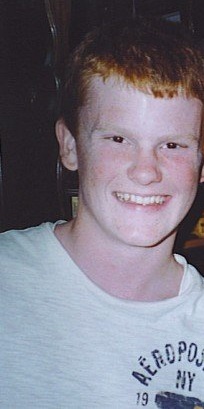
The problem with pornography is that I was raised in a conservative non-denominational (evangelical) church. We didn’t talk much about sex in church, except that it was bad for teenagers and it was bad for anyone not married. The only and best way to experience sex was in a married relationship. So, naturally I chose to hide it all. And I punished myself for it. I had already struggled with self-image, with hating my red hair, my freckles, my chubby-ness, my lack of muscle definition. And then I began struggling emotionally and spiritually. I chose physical ways of expressing the emotional turmoil brewing in me. I chose binging and purging, eating because food numbed the pain and purging because I was convinced food was my enemy, keeping me from looking a specific way. Binging was a way of expressing the lack of control I felt and purging was my attempt to combat that lack of control. It was how I attempted to gain control of my entire life, though it rarely, if ever, actually works. It just made me feel even shittier because I felt as though I couldn’t get my life together.

Besides expressing the emotional death happening in me through food, I also chose to express it through cutting. Running a scissors across my arm allowed me to transfer my emotional pain into something physical, something tangible. I could understand physical pain. I had been taught and I learned how to deal with physical pain. I had not been taught how to deal with emotional pain, especially as a boy. I wasn’t supposed to cry about my emotional pain. I wasn’t supposed to express my emotional pain to others. To express emotions as a man in the United States, specifically the rural Midwest, is to admit weakness, to admit to being a ‘lesser man’ (which is somehow the ultimate low of a male’s life). This notion of masculinity, of what it means to be a man is toxic. It is literally toxic when it convinces a young boy that the best way to handle his emotions is to attempt to bleed them out of himself. It is toxic when it convinces a young boy that he cannot share his inner turmoil for fear of being shamed and ridiculed. It is death-dealing when it has the potential to convince a young man that his life is not worth living if he has to endure same-sex attractions one more day (because he’ll go to hell forever if he does). Our notion of what it means to be a man is skewed and warped, and it is no help to young men struggling with their sexuality. The reverse can also be said about our notion of what it means to be a woman or a young woman struggling with her sexuality.

Through those first three years of high school, I attended church and youth group on a regular basis. I prayed and prayed and then prayed some more for God to take this attraction, this lust, from me. I hated myself for the lust and the attractions I had and I was convinced that even though God loved me, I would end up in hell if I couldn’t kick it, if I couldn’t get rid of them. And I was convinced that if I tried hard enough, believed enough, prayed enough, trusted God enough that God would change my sexual attraction. (I don’t use orientation because at that point in my life I didn’t believe orientation was a thing – because I believed it could be changed.)

I went through periods of reading the Bible every morning and periods of intensive amounts of time spent in prayer. I attended Bible studies, youth group every Wednesday, church every Sunday, mission trips during the summers, and other church related events. I was considered a leader of the youth group in spiritual or faith matters. I focused on my heart, because isn’t so much of Evangelical Christianity a ‘heart problem.’ (I have some dear Evangelical friends who don’t use this language anymore and I’m thankful for that.) I focused on my body and subduing it into action, because the realm of Christianity I grew up in taught me not to trust my body. I was taught that the body had desires that were not holy. They were not given by God, but that we were too often given over to our bodily desires because we didn’t follow God properly. We weren’t given tools to help us love our bodies or ourselves because we were despicable sinners who were at the mercy of God. And when we went to heaven, we would leave these bodies and these bodily desires behind.

This is a warped Christianity. To say that something is a ‘heart problem,’ but not acknowledge the body that is involved, has strayed from Jesus. Christianity is rooted in Jesus’ body and blood. It is rooted in the physical life that Jesus lived and his living ministry. It is rooted in the way he taught us to live. It is also rooted in his death and in his resurrection. Death is a bodily action. It is not a metaphor (though we often use it as one because it must be understood both literally and metaphorically). His body died and his body rose. He died and he rose. Those two statements are the same. We cannot separate ourselves from our bodies.

And it is in this notion that I realize the damage Christianity did to me those first three years of high school. I recognize the harm I did myself in the name of Jesus. I harmed myself, my body, in order to control my body. I could not control the sexual attraction I felt for other men and so I attempted to gain control in other ways. Now I know that the only way to gain control is to learn to accept your body as yourself. To admit that you and your body are one in the same and that to love yourself means to love and accept your body. It means that young people must learn to accept their sexuality and to love themselves precisely because God created them with that particular sexuality. It means that we need to stop divorcing our bodies from our spiritual lives because it will only cause more harm. A Christianity without the loving of bodies does not seem like the Christianity I read about in Scripture, particularly from the Gospels. It is not the Christianity I have come to know and love. May we all, gay, bisexual, or straight, cis, trans, or anywhere on the spectrum of gender identity and sexual orientation learn to love ourselves, to love our bodies, for we were all created in the Image of God.

Previous posts in this series: Gay and Christian [Surviving Middle School]Gay and Christian [The Early Years]

In Light of Orlando

I’m taking a break from my series about growing up gay and Christian to write a piece concerning Orlando. I’ve had a lot on my heart and mind since the attack at Pulse, a gay nightclub, in Orlando, Florida. I know it’s been a few weeks, but that first week or two I was feeling so many strong feelings I wasn’t sure I knew what to say or how to say it. I could hardly write about anything because I felt so weighed down by grief and anger. What I wanted to say, so many other people had already been saying on Facebook, and so, I even wonder how my words right now will be much different. But, I feel the weight lifting as I write, and I believe that means this is what I should be writing about.

People had many opinions about the shooting that took 49 lives and wounded over 50 more. Many were quick to call it terrorism because the shooter affiliated himself with Daesh (more commonly known as ISIS) immediately prior to entering the club. Others were quick to call it a hate crime because it was committed against minority groups (LGBTQ+, as well as Latinx and African Americans). There were those just as quick to condemn assault rifles as those claiming “Guns don’t kill people. People kill people.” While much has been said, I have a few things of my own to share.

Yes, dear 2nd amendment clingers, guns don’t kill people. People kill people. But guns sure help when a person can kill 49 people in a matter of seconds or minutes. By immediately jumping to this response, I believe that you are saying that the lives of those who were murdered are less important than your right to own a particular type of gun. You are saying that my life and my safety as an LGBTQ+ person is less valuable than your right to own any type of gun you’d like. That’s frankly unbelievable to me. And it’s utterly unChristian. If you don’t claim the Christian label, then I have nothing to say except that my life and my safety are more important than your right to own any type of gun.

If you are a Christian, then it is time to put your fear away and let go of your right to own any particular gun you wish. For life is more important than clinging to our fear, than clinging to our rights. Choosing safety for others is more important than rights to a specific type of gun, or at least your right to get one so easily. The way of Christ has never been one of violence. It has always been the way of the Cross, the way that exposes violence for its atrocities. Let us always remember that violence is not the answer, and guns are not an answer and guns are not more important than my life and my safety and my soundness of mind.

Now, to the note of terror and hate. The act is not terrorism because the shooter is Muslim and claimed affiliation with Daesh, but it is terrorism because it struck fear and terror into the hearts of LGBTQ+ people around this country. It is terror because it made us afraid, made us question going to Pride this year, made us realize that it could have been any of us. The media in our country likes to portray Muslims as terrorists, and this is slander against the mass majority of those who practice Islam. For terrorism comes from the acts of all different kinds of people committing all kinds of heinous crimes; a white man killing 9 black people in a church in Charleston, a Muslim shooting 49 LGTBQ+ people in a gay nightclub, a police officer shooting Tamir Rice, a 12 year old black boy, over a fake gun he was holding. Terror comes in many forms and we would be dishonest if we labeled Muslims as a whole terrorists and not straight, cisgender, white men and not police. We commit a dreadful sin against a people when we deem most or all of them as terrorists. Let us repent of that stereotyping, of that sin.

It is also a hate crime, because it was committed against a specific community of people, LGBTQ+ people. The shooter had also expressed vehemence towards LGBTQ+ people previously when seeing two men kissing. His homophobia was not a secret. His homophobia was not an isolated feeling and therefore, his actions were not an isolated event. Homophobia, transphobia, queerphobia is a real thing in this country. It is alive and well and breathing down our necks from every new law that bans transgender people from using the bathroom of their choice to each law that allows people to deny service to LGBTQ+ people. It is alive in every church that refuses to allow LGBTQ+ people full inclusion in the life of the church, from allowing them to marry to ordaining them. Yes, every church that participates in some form of exclusion of LGBTQ+ people is participating in homophobia and is contributing to the chain of events that led to the Orlando shooting.

Yes, dearly beloved Church, you are responsible. You are as culpable as the shooter himself in creating this atmosphere of homophobia, of perpetuating the lie that LGBTQ+ lives are less valuable that straight, cisgender lives. Yes, it is time for you (and me because even though I am a gay man, I still consider myself a Christian and part of the church) to own up to our complicity in the taking of these lives. I do not want your apologies and your condolences if you are not affirming of LGBTQ+ people and if you do not celebrate our lives. I do not want your mourning if I cannot have your celebrating. As Beth Watkins (a fellow undergraduate alum) put it, “If you didn’t show up to the wedding, don’t invite yourself to the funeral.” I could not say it any better. Christians are supposed to mourn and celebrate with people. I am sick with grief and anger over your petty beliefs about the rightness and wrongness of my life and the lives of LGBTQ+ people.

Dear Church, it is time you began to practice the love you preach. It is time for you to confront your homophobia and your xenophobia and your fear of other religions. It is time for you to confront yourselves and the harm you have caused and continue to cause to people of the LGBTQ+ community, as well as those of the Latinx and African American communities and the Muslim community. It is time for us, as a whole Church to learn that the action of love is far more important than any belief we hold, for Jesus models that in Scripture time after time. It is far past time for us to learn that love is far more the Gospel message than fear, than hate, than judging others before we understand and know them. Dear friends and dear Church, perfect love casts out all fear. I pray that we may all choose love each day over fear and hate, that love will win out. I pray that as a Church, we will take responsibility for our wrongs and for the harm we have caused LGBTQ+ people and the harm that we cause the Muslim community. And may the terror struck in our hearts by mass shooters and by hate crimes be driven out by love and joy and hope. And I pray for the victims of Orlando and all their families that they may find some semblance of peace and joy after their grief and anger and guilt have subsided, for those are heavy burdens to bear.

Gay and Christian [Surviving Middle School]

I’ve been home this past weekend for our little town’s Homecoming. It’s a big to-do with a parade, a carnival, and the most important part, the beer pavilion. Ordering a Summer Shandy for only $2.50 – what a deal! Seeing all the people who only remember me as ‘Little Timmy’ – what a nightmare! But, I go for the cheap Summer Shandy and the ten friends I still enjoy spending time with. But this year feels a little different to me. It’s the first year that I’m officially married. And I’m married to a man. Something small town Illinois doesn’t always understand or look fondly upon. I’ve gained a new sense of confidence over the past 9 months of marriage and I felt more ready than usual to talk to acquaintances, to friends’ parents, and to not be awkward or uncomfortable introducing my husband to people.

A part of this confidence comes from simply being married and growing our lives together. To be ashamed or awkward or uncomfortable about introducing my husband would mean being ashamed or awkward or uncomfortable about a part of myself. And I am not. Thank God. The other part of this confidence comes from reading a lot of young adult fiction lately with gay protagonists, who are usually in junior high or high school and are going through much of the things that I went through, internally and externally. They’ve been making me think a lot about my experience growing up, which has also inspired me to write this series.

In my last post Gay and Christian [The Early Years], I wrote about my early years, probably mostly around five and six years old. I have scattered memories from that point until junior high. But let me tell you something about junior high. It’s the worst! Bodies are changing and hormones are wreaking havoc on unsuspecting victims. I myself was a late bloomer. Puberty didn’t hit me until freshman year of high school, and even then, it took a few years for my body to grow into itself. So, junior high meant other guys getting stronger and faster, while I got pudgy. I got lapped in the mile almost every single track meet (by one or two of my own team members). My closest friends were mostly girls, and they hid pads in my lunch box that they had colored red and teepeed my locker when they had after-school practice for sports (you know who you are!).

My sexuality came to me in middle school through curiosity and insecurity. I started to notice other boys in the locker room when I was in 6th grade. It was then I began to wonder what it would feel like for another guy to wrap his arms around me, to feel that physically close with another male. I also became curious about the changes happening to them and why they weren’t happening to me. I remember feeling afraid, at times, that something was wrong with me. Other times, I just felt mad I wasn’t developing as quickly. 

Junior high became a time for me to try on different hats, have different friends, see what parts of my personality would come through and stick. I tried on cursing for a time, saying those words under my breath with friends, thinking we were real badasses. I tried friendship with both boys and girls, but my friendships with boys dwindled as I progressed through those middle school years. I ‘dated’ a girl in 7th grade for about three days. I asked her out through a note that I gave to her cousin and he gave to her. She passed a note back to me through him and I made her a Valentine’s gift that night. She broke up with me a few days after that. Real tragic, I know.

As far as faith goes, I went to church and participated in youth group. We had some great youth leaders who knew how to connect with junior high kids. I thought they were really cool and we would sit in a circle singing CCM (contemporary Christian music) songs about Jesus while one of them played the guitar. I think those Sunday nights were when I started to feel something when it came to God. I had always memorized Scripture and known ‘all the answers.’ But, that was the first time something stirred in me for the Divine, for something greater than what I had yet experienced. Whether it was the guitar or Evangelicalism or my naturally emotional self, I don’t know. But, something was coming alive in me that had apparently been brewing for quite some time.

I don’t remember much besides that about church and faith through my middle school years. The awkwardness of those few years at school in my friendships and relationships with classmates seems far more clear and vivid and important in my mind. Those were the worries of my junior high self. I think I felt rebellious for cursing in 7th or 8th grade. But, I don’t remember thinking much about my sexuality and faith. Granted, I barely understood what sexuality even meant at that point in life. I’m not even really sure I knew that much about homosexuality at that point either, except that it was a ‘bad thing.’ I’m not quite sure I equated my thoughts about boys or wanting to feel the warmth of their bodies close to mine as being gay or homoerotic.

Discovering one’s sexuality is never an easy task, especially in a church and society that tells you sexuality is something to be quenched, stifled, taken control of before it takes control of you. Coming to terms with your desires for men while being pressured to talk to girls and ask them out can be more than difficult. It can feel near impossible at times. It’s funny to think I have journals still, that I kept from that time where I wrote about all the girls I liked. I had many crushes, but I never wondered about the warm embrace of another girl. I never dreamt of a girl holding me tight and kissing me. Those dreams were reserved for boys, and boys alone.

I have found one of the greater trials in life is to bring our inner lives and our outer lives into each other more fully. It can be a daunting task to bring yourself out of the closet and into the light, letting people know you for who you are. It can feel exhausting at times to lift the demands of our culture and especially the culture of the church off our shoulders and say to them, “Enough is enough.” While it is a difficult task, it is one of the most rewarding. To be authentic with friends and family and the rest of the world is both terrifying and remarkably beautiful. Thank goodness I wasn’t meant to have it all figured out in that awkward junior high phase. And thank God I didn’t stay in junior high forever.

Gay and Christian [The Early Years]

Since my post on Growing Up Gay and Christian was so popular, I’ve decided to write a more in-depth series about my childhood experience with regard to my faith and sexuality.

[The Early Years]

I grew up in an Evangelical home. For those of you who don’t know what evangelical means, it means different things to different people. But, for the most part, it means that I grew up believing the Bible was without error. I grew up believing that men were the head of the household and that women couldn’t be pastors. I grew up believing it was my job to convert as many people as I could, to show as many people I could the love of Christ so that they would accept Him as their personal Savior and be saved. No small feat, that last one. But most importantly for this post, I grew up believing that being gay was a sin and that I’d burn in hell for having same-sex attractions.

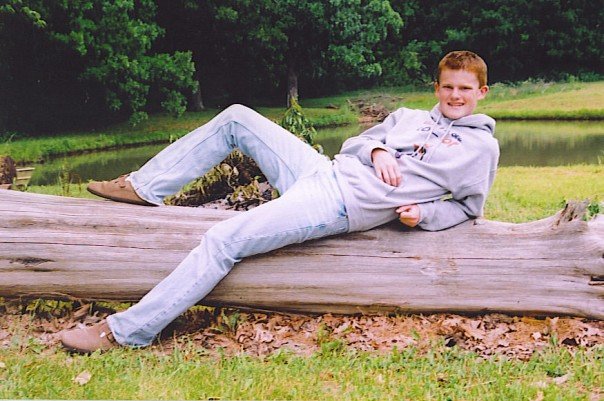
Granted, I didn’t know most of this when I was only four or five trying on my mother’s heels and pretending to be a girl. I’d wear one of my dad’s bandannas around my head with a rubber band tying the back of it into a ponytail. I’d wear ‘my hair’ as I ran laps around the house and played basketball in the dining room. I would record the scores from my imaginary friends (who I was acting as) and then compete as myself. While I wasn’t an only child, it felt like it at times with my closest sibling being 8 years older than me. Left to my own devices, since a 13 year-old rarely wants to play with a five year-old, I created all sorts of fictitious friends and scenarios to help me cope with my early childhood.

I remember being yelled at to take ‘that thing’ off my head when we sat down for dinner, but I’d cry out, “But it’s my hair!” I think I usually won that argument. I remember (and have been told on many occasions) when I was around four or five, my sister gave me her Mardi Gras beads. In front of her and her then boyfriend, I said, “Great! I can use these when I act like a girl!” Then I whipped my head directly towards her boyfriend and said seriously, “I do act like a girl,” and pranced off. On occasion I would play house with friends who would come over and I’d choose to be the woman (because I had no notion that two boys could represent a household). I’d put balls up my shirt to complete the womanly look I had created for myself: blue bandana wrapped around my head with breasts so large they’d break any woman’s back in real life. This seems hilarious and crazy to me now. I could just imagine seeing my five-year old self now and shaking my head in response while laughing.

But, now I would understand it. I would understand the need to try on a different part of myself that society and the Church wouldn’t let me. I’ve talked with other gay men about this and of the people I’ve talked with, we’ve all shared similar experiences. What perplexed me at first about this was that none of us identify as transgender. But the more I thought about it, the more I realized I wasn’t exploring my gender as much as I was exploring my sexuality. At that age, I had yet to discover a same-sex couple or understand what that meant. I didn’t think that two men could be married and running a house together. I wanted to pretend to play house with another boy, but because two boys couldn’t do that, I took on the ‘look’ of the girl.

As far as putting on ‘my hair’ and competing against myself goes, I’m not totally sure. My only imaginary friends were girls and they were all my sister’s friends, just ‘Little Dana’ or ‘Little Erin.’ I took what was in my life and made it imaginary and small so that I could have company all the time. And since I had no one to compete against, I had to compete against myself (or rather my imaginary friends.)

I’m still recovering from The Patriarchy. As I grew up, I learned that little boys weren’t supposed to try on ‘girl’ things. I learned we weren’t supposed to cry and show our emotions in public. I learned that meant we were weak. I learned that we weren’t supposed to want to be close with another boy like we were supposed to be with a girl. I learned that we don’t talk about our sexuality, that it makes people uncomfortable. I learned that my desire to play house with another boy was wrong because it wasn’t in God’s design for human culture. Well, friends, I can tell you that is a load of bullshit.

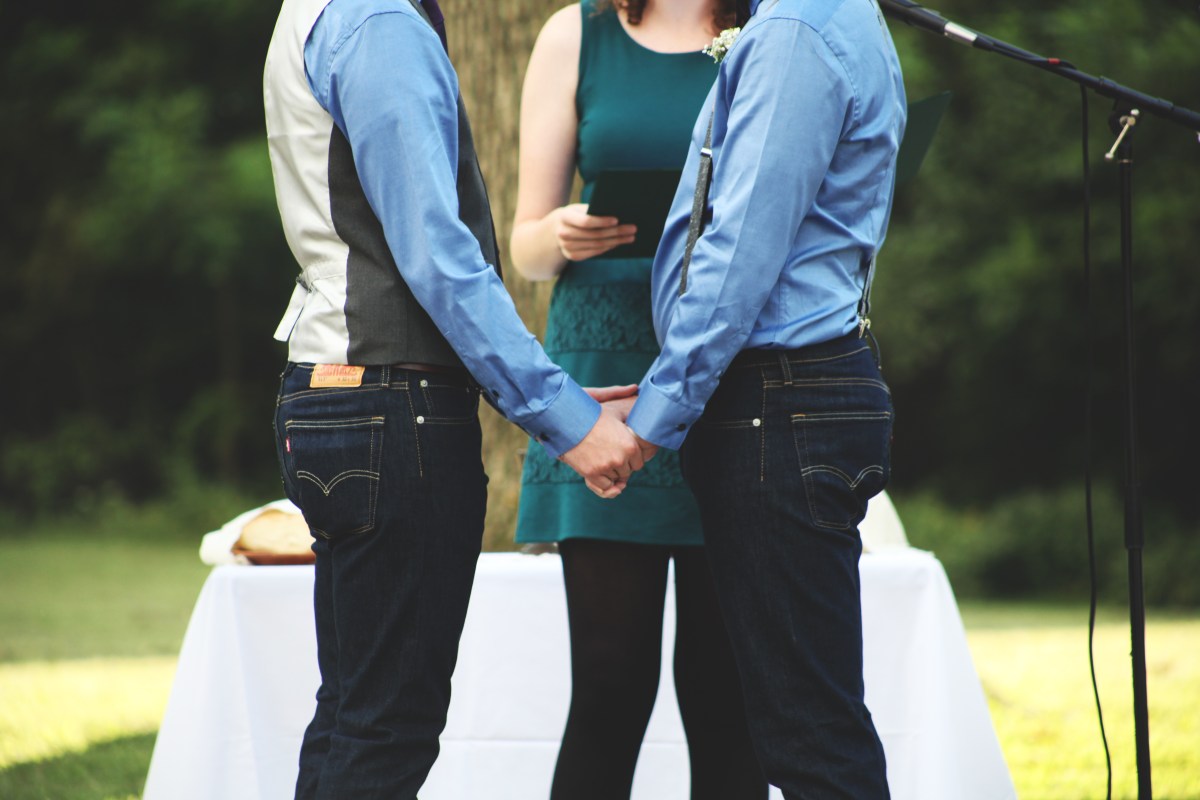
I play house with another man every single day of my life now and it’s one of the most beautiful and rewarding and authentic things I do. We cook together and we clean together (except I clean the bathroom and he cleans the bar cart). We play games and sit reading on the sofa next to each other. We share our money and pay our bills together, both making money and working so we can enjoy our shared lives. We make so many decisions together as we craft our home and intertwine our lives. I wish I could go back in time and tell 5 year old Timmy this. I’d tell him that it’s okay to be different. It’s okay to wear your ‘hair’ and pretend to be a girl. It’s okay to want to play house with another boy, because that’s what you’ll end up doing for the rest of your life. I want to tell him that two boys and two girls all over the world play house together, that you’re not alone. I’d want to say that even though your dad yells at you to take off that bandanna at dinner, he’ll be at your same-sex wedding with a big smile on his face congratulating you on your marriage. I’d tell him that your family loves you for who you are and you’ve already made friends with some of the people that’ll support you through your coming out and coming to terms with yourself.  I’d tell him that God loves you just the way you are.

If you feel comfortable, leave a comment below telling me about a similar experience you’ve had as a child. I’d love to hear other stories and anecdotes from all of you.

Be sure to follow my blog (at the bottom right of the page) to receive e-mail updates when I post the next pieces in this series.

Growing Up Gay and Christian

I recently read The God Box. It’s about a young man in his senior year of high school coming to terms with his sexuality in the context of his evangelical Christian faith. My husband has been wanting me to read this book for a few months now, and he finally got it from our library so that I could read it. I loved it. Besides the main character’s identity issues as a Mexican American, I resonated with other aspects of his story, like his struggle to reconcile faith and sexuality and his inability to tell anyone about his same-sex attraction. It felt both healing and jarring to enter back into that particular way of thinking, of thinking that I’d go to hell for accepting the “homosexual lifestyle,” of thinking that all gay people did was sleep around with each other, of thinking that my attraction would never go away so that I could fully be with a woman.

I remember nights writing in my journal, angst strewn about the pages: angst about my sexuality, angst about the boy I liked, angst about my looks, my weight, my hair color, angst because teenagers are already full of angst. Throw an evangelical Christian boy in a small, Midwestern town and the recipe for angst is overwhelmingly potent. I remember too many tears, too many fears, too many nights wondering how I could go on praying for change and yet continuing to feel the same attraction over and over. I remember two different people living inside of me throughout high school.

I remember being preached about or talked about at church when no one knew they were talking about that good little Christian boy who was a leader in the youth group. Gay people were always somewhere else. They were always somebody else. And they were always infringing upon the sanctity of marriage, the greatest threat to the family in the U.S. (No, we never talked about adultery or physical abuse or rape within a marital context or a crippling notion of masculinity or femininity as the greatest threat to the family.) I remember the derogatory names whispered and coughed at me in school from the select few who couldn’t deal properly with their own masculinity, so they took it out on others. I remember trying so hard and fighting my attraction with fervor only to find it growing stronger in response to my prayers and petitions. It’s as if God was saying, “You say, ‘Take this away.’ But I say, ‘Love yourself for who I created you to be.'”

I have also been reading Rachel Held Evans’ Searching for Sunday in which she talks about leaving the evangelical Church. It’s continuing to heal me from the hurt and pain inflicted upon me by my faith growing up. She also talks about loving what evangelicalism gave her. While I’m still trying to figure out what I love about evangelicalism, I do know that I’m thankful for growing up in the Christian faith. While I have deconstructed that childhood faith, I wouldn’t have the pieces to begin constructing a faith life now if I didn’t first have it given to me from my parents.

The most important part of my journey in faith and sexuality has been to love myself. I walked away from faith in high school and began learning how to love myself, how to say “no” to destructive forces in my life. It was my first lesson in saying “no,” and thank God I did. As I learned to love myself, I came to find God again. And I found God where God had always been, right beside me loving me for all that I am and smiling that I was finally on the road to accepting myself for who I was created to be. For anyone struggling with understanding and accepting their sexuality, their gender identity, who they feel they are on the inside, especially in the context of faith or particularly evangelical faith, the best advice I can give is learn to love yourself for who you are. You are deeply and fiercely loved by the God of the universe just as you are.

Thank God I’m no longer where I was in high school. Thank God for the saints in my life who led me down a Christian walk that allowed me to find my identity as a Christian and as a gay man compatible. Thank God for the people who have loved me through my faith journey, who have loved me through coming out and coming to terms with my orientation. Thank God for the people who have stuck with me every step of the way. Thank God for changing hearts and minds and opening up people to love me better. Thank God for my husband and for our story of friendship and love. Thank God for young adult fiction with gay characters who tell our children that it’s okay to be different, that it’s okay to be gay or transgender or anywhere on the spectrum of sexual orientation and gender identity. Thank God that people are starting to pay attention and that LGBTQ people’s lives are being rescued from suicide. Thank God for love that wins out at the end of the day. Simply, thank God.

Spring is for Wishes

I have taken to calling the white dandelion puffs that pop up all around the country in yards and parks “wishes.” You know, when you try and blow all the little seedlings off at once you’re supposed to make a wish, and if you blow all of them off at once, that wish will come true, of course! So, since you make a wish for them, I now just call them “wishes.” We go to the park and I say, “Look at all the wishes!” with a big smile on my face and excitement in my eyes or “They’re mowing down all the wishes!”, sadness weaving its way through my voice. My husband laughs at me and then when I’m at work sends me a picture of wishes still alive at the park and beneath it he says, “And look, there are still wishes after the mowing yesterday.” He knows me well and the things that bring me joy.

Most homeowners find these little puffs of fun and hope and laughter to be nuisances. They call them weeds and spray their yards with weed killer so they don’t have to deal with them. Me, I’d deal with them all day, blowing like I’m blowing out a million birthday candles making wishes left and right. Wish can often sounds like a light and fluffy word. But, if it makes you feel better or more comfortable or feel like my words have more weight, just read prayer or hope in place of wish. That’s essentially what I’m doing when I make a wish. I’m praying for a friend’s cancer to go into remission. I’m hoping for a world where children don’t die of starvation. I’m hoping for goodness and light in my relationship with Reed or I’m praying for our country to get its shit together and stop being so hateful.

Spring has sprung and it has brought us wishes by the thousands and millions. Spring is when the death of winter has come back to life. For Christians, we celebrate this through Easter, the rising of Christ from the dead. We believe that new life can burst forth where death had previously been. Joy and happiness can burst forth out of depression. Love can be born out of hate. Easter is the hope that not all will end in disaster, that the world won’t burn to the ground around us. It’s the hope that we can have lasting peace, that people can some day learn to get along. It’s the hope that we can set our differences aside long enough to see that we’re all just humans trying to be loved in a world that sometimes offers so little love. It’s the hope that we can see each other for who we really are.

Spring is bursting forth all around us here in Illinois. Birds are chirping every morning when I leave for work and the leaves are coming out in droves. A few days ago, I stood underneath a tree we were walking under at the park and looked up. “Look!,” I said, “It’s full of leaves. It’s so green! And it’s so shady under here!” Friends, I pray, hope, wish for us to marvel at the newness, to look for the hope when it all feels so bleak. I will keep making wishes for all of us to feel spring in our hearts and minds and bodies, to be bursting to the brim with goodness and peace and most of all, love. I wish love upon each and everyone of you: love for yourself, love for your family and friends, and love for those you don’t know and those you don’t like. May you hope and pray for goodness and love when you see wishes popping up in your front yard and at the park when you’re hanging out or having a picnic. When life feels hopeless, remember to pick up some wishes and blow with all your might. For wishes born of love and hope have such a good chance of being carried by the wind and planted in the place they ought to be.