On Being Wrong and Jesus

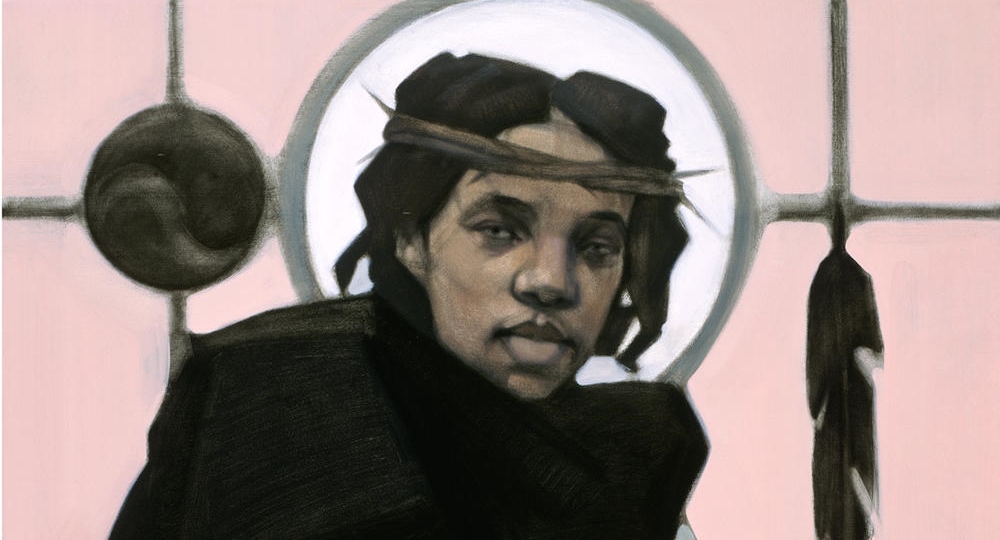
In my last blog post, I wrote about having a conversation with Jesus, a black, trans, woman Jesus. She was bold, beautiful, and unapologetic, because that’s who Jesus was and is and will continue to be. Throughout the past few years, I’ve been going through a lot of theological overhaul of the Gospel I grew up with. When we are young, our understanding of God and of faith and of the world don’t mesh as we grow up. Our understandings become more complex. They take on a dimension and depth with which we could not comprehend in our small years of life on earth. With that said, I also realize that my understanding of faith and God and the world will probably evolve over the next fifty years of my life and I will look back on this time and think I was so simplistic, so naive in my worldview. But, I have what I have right now and that’s what I’m working with.

Over the course of twenty-five years of life, I have come to find that being wrong is a normal part of life, no matter how much we hate it or attempt to evade it. I have spent my fair share attempting to never be wrong, and when I was, to admit it without admitting it. I would like to think that I have come to a place where I can admit I’m wrong fairly easily. But, as my husband has pointed out many times, it takes a lot of effort to prove me wrong. Our relationship has a little too much of me saying, “Hmmm,” and him pulling out his phone to look it up. I’m a natural skeptic, what can I say!? I’ve grown this way out of self-preservation. My sister once (actually, every other week of my childhood) told me I’d get my period some day because even boys have periods. My brother once told me I had an older brother who had drank the chemicals under the sink and died before I was born (This was utterly untrue). They all woke me in the middle of the night when they’d gotten home from a night on the small, small town we grew up in and told me I was late to go fishing with my dad. I frantically threw clothes on before looking at the clock and realizing I had another four hours of sleep. All of this is to say that I now need it proved to me before I admit I’m wrong, and then I’ll gladly admit it. But until then, I’ll not believe a word. Because family.

But also because education. When I learned that Jesus wasn’t white, I was shocked! When I learned God wasn’t a man, it felt like a dream come true! When I finally believed that the universe was billions of years old, my understanding of God grew exponentially. When I learned how to read the Protestant Bible as a collection of 66 books written most likely by all men a long, long time ago, it dramatically shaped my view of my faith in the best way possible. It became more complex, more nuanced, filled with a richness I had yet to know in my faith. All of my learning to let go of the wrong things I grew to know as a child was freeing, exhilarating, and incredibly frustrating. I so wanted to cling to what I knew, to the thought that I was right and had it all figured out. But what wrongness and approaching life without knowing all the answers can teach us most is humility.

All of this learning to be wrong inspired my last post. My faith has taught me that Jesus shows up to the world in its least likely places, in the places where oppression is fiercest or where it is most insidiously subtle. The Scripture surrounding Jesus portrays him as a Jewish male who is attempting to overthrow the Roman Empire with the Kingdom of God. Jesus is part of an oppressed group of people forced to pay taxes and homage to the Empire and to be subject to their ruling. As much as Jesus is for life and enjoying it to the fullest, he was also against those who would take life away from others. Jesus opposed oppressive forces in his day.

My reading of Jesus in Scripture begs me to see Jesus in our society today. It begs me to understand the forces that are at work all around me, both life-giving forces and oppressive ones. It makes me dig deeper into myself to find where I fall in both of those categories because we most often fall in both categories to some extent. This is when I find that Jesus would show up today and look very different from me. I am a white, cisgendered (meaning my self-identification as a male matches my biological sex), middle-class male. Besides the fact that I am gay, I sit pretty high on the ladder of privilege in our society. And on the topic of gayness, being a white, cisgendered, male is still unfortunately the highest rung on the ladder of privilege in the gay community.

I find that Jesus would not look like me, would not sound like me, dress like me, or express herself like me. Jesus does not have to be a man to save us. Jesus could show up in a woman’s body and save us just the same. She would be loving and self-sacrificing and yet angered by injustice and refuse to sit down and shut up. She would chant that black lives matter, because they do. Not because they matter more than white lives, but because Jesus would demand that they have a seat at the table just like everyone else. She would be demanding gender neutral bathrooms so that trans people could feel safe and loved and included in society. She would be railing against any law that allowed religious groups to refuse service to lgbtq folk. She would be outraged by any system calling for the registering of Muslims in the U.S. Jesus would be in our midst loving us in her fiercest way possible to change for the better. Jesus rarely talks about easy stuff in the Gospels and I imagine if Jesus came today, she would be just as radical, just as political, just as sharp and witty and full of love as he is in our Gospel accounts in Scripture. Jesus brings the Good News. And the Good News for me is that sometimes it’s good to grow up and find out I was wrong. And it’s good to fight for those with less privilege and rights than me, for that’s what Jesus would do. That’s the Jesus I find in Scripture and that’s the Jesus I find when I look in the eyes of people who are different from me.
Coffee Talk

In the tradition of the different Biblical perspectives of Jesus and the continued tradition of the saints who have gone before me, I’m writing about where I think Jesus lives today. I’m writing about where I find Christ shine through most in the world, through the vulnerable, through society’s “least of these” lens, through people who have gone through hell for being truthful and loving to themselves in spite of the world’s hatred for them. I want to thank Matthew, Mark, Luke, John, and Paul for their varied depictions of Christ, of their differing perspectives and their differing opinions of Christ. I want to thank all of those whom I have read or encountered who have helped me see Christ differently and therefore have drawn me closer to the Christ found in Scripture and to the Christ found in all of creation: Paul Young, Katherine Sakenfeld, Edwina Sandys, Kwok Pui Lan, John Howard Yoder, Alice Walker, Katie Manning, Jeff Eaton, and Ruth Huston.

I met Jesus at a quaint indie coffee shop in the burbs yesterday. She looked so out of place. I loved it and hated it. I felt uncomfortable by her presence and so overwhelmed by her beauty, her love for herself, her daringness to meet me in my own comfortability. I felt ashamed. Why couldn’t I travel to her side of the tracks? My own damn white middle-class privilege keeps me from meeting Jesus where she feels most comfortable. Damnit. Next time. Next time I’ll go find her and stop making her meet me on my turf.

“Hi darlin’,” she says to me and smiles over her coffee.

“Hi Jesus,” I smile at her dark skin, her chocolate brown eyes, and her strong jawline. She is the most beautiful human I have ever laid eyes on.

The white couple sitting next to us look uncomfortable. I can’t decide if they’re more uncomfortable by her blackness or her transness.

She’s growing her hair out in a big afro. It’s divine.

“Girl, stop staring”

“Sorry, Jesus. Your hair is simply amazing.”

“Why thank you,” she puffs up the bottom of her afro with a proud look on her face. “But that doesn’t get you off the hook.”

“What hook?” I ask, guiltily.

“For not coming to my home today.”

I look down, ashamed. “I know.”

“And don’t you be playing the victim, here. You know you aren’t the victim. Get your head up.”

I look up and stare her straight in the eyes. She’s smiling, but her hard eyes tell me she’s not having one bit of the pity party I’m throwing for myself.

“Okay,” I say, not sure what topic to broach first.

“How’s the transition going?” I ask, hoping I’m not being too invasive.

“It’s going. Most people don’t question me anymore. I had some woman the other day ask if I was a man or a woman. I told her I was a woman, but that it wasn’t any of her damn business. She looked like she didn’t believe me. So I asked her if she wanted to see my lady bits.”

I gasped and laughed at the same time, “No?!”

“Oh yes. Respectable people,” she does air quotes around respectable, “want to control your every move, but are scandalized when you call them out on it. They’d rather keep people down, keep you underneath and behind them than acknowledge your equalness, but they want to do it in a subtle way. They don’t want to seem like an outright racist or bigot. They don’t understand they’re caught in a system that encourages them to be so.”

“I know, I’m sorry.”

“I don’t want your apologies, mister. I want your heart and your mind and your actions to be different. I want you to stand up for me and for my people.”

I feel myself bristle at her term ‘my people,’ offended and sad she doesn’t include me in ‘her people.’

“Oh, stop it.” She snips.

“Stop what?” I ask defensively, trying to hide the emotions on my face. She can see right through me.

“Feeling sorry for yourself. You know you’re my people, too. But, you also know I’ll always take the side of the oppressed, of the ones who aren’t protected by society, by the laws of the land, by the Church, which by the way is supposed to follow after me. But, somehow, they keep moving out and building buildings away from all the people I’ve chosen to surround myself with. And you know, sometimes you’re the one I’m defending, but usually I’m having to defend others against you, you know that.”

“I’m trying to know that and I’m trying to change that.”
She softens a bit, “I know that, honey. But, you still have a long way to go.”

“I know,” I say, trying to not throw a pity party for myself, but also trying to feel rightfully repentant for my actions, but mostly for my silence and non-action in the all moments I should have spoken up and done something.

“Girl, let’s go for a walk and get out of this,” she looks around eyeing all the people staring at her like she doesn’t belong, ”place. Let’s hear the birds talk to us and see the trees waving back.”

I smile. I love the way Jesus talks about the birds and the trees, like they’ve got hearts and souls they’re trying to share with us.

“Sounds good,” I smile as we trade the stuffy coffee shop for the refreshing breeze and blue sky.

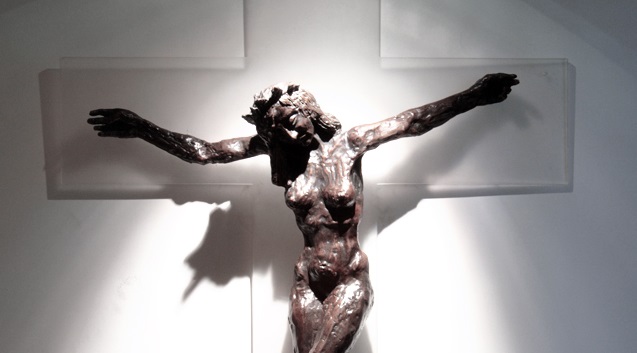
Photo above is the sculpture Christa by Edwina Sandys.

To My Younger Self

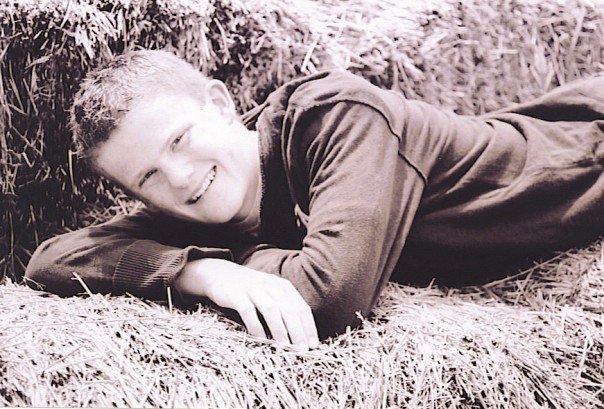
Dear 15 year old Timmy,

I just read a book that you would love and hate. Morally, you would be so utterly opposed to this young adult novel that I just read. You’re so young and naive and you think you’ve been wired incorrectly, that God did something wrong to you in the womb. You think you know how you’re supposed to be, to live, to act. But, you’re wrong. You’re attempting to live out a lie, a falsehood. You are, in fact, rejecting God’s good creation when you keep trying to change yourself, make yourself different than the way you were created. Oh Timmy, how can I make you understand?

Read this book. I know, two young men fall in love, and you’re going to be so intrigued and turned on by it, and at the same time you’re going to be disgusted with yourself for feeling that way and therefore, hate the book. But please, read it. Give it a chance. Give love a chance. Give yourself a chance to be a normal teenage boy. You’re growing up too quickly because you’re dealing with pain even grown people shouldn’t have to deal with. You’re trying to ignore and change and tamper with the very fundamentals of who you are. Please stop hurting yourself in the name of God.

I want you to know that there is hope. There is hope when love is shared. There is hope when you learn to love yourself. There is hope when you learn to let that love flow through your freckled face that hates the way the sun kisses you, through your strong legs that run your pain away, through your wrist that you try to keep strong and straight. There is hope when you learn to love the things about yourself of which you are so ashamed. There is hope when you learn to let out those things which are hidden, when you usher them out of the closet no matter what anyone else might say or think.

I want you to know how brave you are. You’ve got more bravery than you know. Let me tell you about all the times you will tell a family member, a friend, a professor, a complete stranger about your sexuality, about your future husband. Let me tell you about the hard conversations that you plow through in the name of love, because that’s what God does, plow through in the name of love. Let me tell you about all the change and growth and goodness that are in store for you. Let me tell you about how it will be so much easier and so much harder than you think. Let me tell you about how beautiful your wedding is going to be, and that you’ll marry a handsome, funny, charming man that you grew to love as more than just a college friend. Let me tell you about how hard it will be to introduce him to your extended family who only knew you as a ‘good little Christian boy’ (implying that Christian and gay don’t go together, which I have now come to believe they most definitely do). Let me tell you how you’ll read this book I’m giving you and it will give you courage to be more yourself than ever before.

You have it in you. And you have it all around you, little Timmy. You have love and compassion and passion and courage and bravery all bottled up inside you for everyone else. Drink deep from that bottle for yourself, for you’ll need it to face the world with all its love and hate. You have all that you need inside yourself and from those around you. You have some strong friends and family to lean on and you’ll find even more friends with an uncanny ability to love, ones that lift you up rather than tear you down. You have people who are going to celebrate with you and mourn with you like you’ve never imagined. Drink it up, because they are good, good people and they will love you well. You have a loving, passionate God who wants nothing more than to see you whole and well and it might hurt like hell sometimes, but cling to God, for God will give you strength. When you want to walk away, remember to always come back (I know you will, since I did), but just know that God loves and heals and mends and makes whole that which is broken. God won’t change your sexuality, because it’s not broken. But, God will mend your broken heart and will heal the hurt from the Church so much so that you’ll go to Seminary and hope to find leadership in a church some day.

I know high school is wonderful and shitty at the same time. That’s okay. I want you to know that it will take time, but life does get better. Just keep learning how to love all the parts of you that you’ve grown up learning to hate. It might take a lifetime to love yourself and be yourself fully, but it will be a life well spent.

I love you dearly,

25 year old Tim

A Toast to Words and Their Givers

To words: you have given me the most precious gift of expression. You allow me to express my pain and joy, my love and hate, my passions and the values for which I stand. You give me the space to live into the creativity the First Word instilled in me and you nudge me until I set you free.  You have given me the ability to express my love for others more fully. You continue to teach me how to use you to express myself, how to bring about good, how to stand up to those who abuse their power. You have let me in on a secret so many either keep locked up or neglect to admit: you bring power. Words bring knowledge and knowledge is power for those who are oppressed, for those who are on the fringes, for those who seek to live into the freedom and love for which we were created. You, oh dear words, bring power that has been used for good and for ill, and I pray that I can use you for all the good in the world. I pray that you bring love and peace, hope and light, joy and fulfillment through my feeble attempts to heed the urging you place upon my lips and fingertips. You have freed me to love myself and others more fully and more beautifully than I could have ever imagined, and I long for others to know the love and joy you bring.

To those who have given me words: I have too many to thank in this regard, but there are some who have played an important role in giving the most beautiful gift of language and expression.

To my mother: you were the first to give me words, and they came in the form of stories read at nighttime under the cover of darkness and a single lamp above my bed. We read for hours and hours countless books, tales of adventure, of bravery, of love and of joy. As a sponge, I absorbed all those words, held them tender in my soul and let them guide me, giving me the light and life I needed to traverse the landscape of school. You gave me the foundation of words that the rest of my life has been built upon. For that, I am forever grateful for I would not be where I am today if it were not for your delight in a story.

To the Church: you have given me the language of faith, ever-changing as it is. You have walked beside me through the long, arduous journey of discovering a faith as old as time itself. Even when I wanted to give up, you gave me more friends, mentors, and professors who gave me more and more language from which to choose to express my sense of the Divine that I found etching itself into my conscience. I found the Divine in a brook bubbling its way through the forest floor or friends reconciling in a warm embrace.

To the musicians, Jennifer Knapp, Joy Williams and John Paul White, Justin Vernon, and Andrew Hozier-Byrne and the other minor poets of my life: you gave me words for my experiences, usually more specifically for my pain. You met me in some of my darkest places and you said, “I know,” with your wailing words and your haunting melodies. You understood me through your music more than anyone besides my husband ever has. To you, I am forever grateful for being with me through thick and thin and for giving expression to that which I could not express myself.

To the authors, J.K. Rowling, Gregory Maguire, Ellen Hopkins, and Alice Walker and the other great story-tellers: you have given me beautiful worlds of magic paired with the extraordinariness of the mundane. You have given me the lens of compassion for teens caught in sex trafficking and drugs, as well as the cold, hard reality of racism we still live amidst. You have inspired me, challenged me, and made me into a better human because I have read your words. You have always pointed to the Truth, no matter what stage of life I have been in when I read you.

To the theologians, Yolanda Pierce, Ruth Huston, Henri Nouwen, and Katherine Sakenfeld and the other brilliant minds who I’ve read or been taught by: you have given me the priceless gift of theological language, of expressing my faith with emotion and brilliance. You have refused to let me be complacent with myself and with the world around me. Your words have stuck with me, changed me and formed me into a more compassionate, understanding, and challenging person of faith. Because of you, I cannot be content to continue in silence when my LGBTQ sisters and brothers, my black brothers and sisters, my Muslim brothers and sisters are being oppressed. You have given me life through the introduction to a God who is not a sadistic, blood-lusting monster and for that, I owe you all my sanity and my faith and a life (hopefully) well-lived.

To the everyday poet and lover of words and life, Emily Humpherys: you inspire me with every word you write. Keep writing, it will bring you and so many others joy and peace and happiness. You have a gift for crafting words and sentences that are deeply rich and full of life. Don’t ever let it die, unless it’s to birth something even more beautiful than what you’ve written.

To the articulate one and lover of people, Caleb Romoser: your eloquence with speech is a combination of your prowess of the English language and also your keen discernment between which words to use and which words to leave out. You love people so well, and you do it so well because you know what words will best be heard in that moment. Never stop speaking for the world is all the brighter because you decide to speak out.

To the most concise and intentional word-smith I know, my husband Reed Burge-Lape: I treasure every word you have ever written or spoken to me. While I could write a five hundred page book about my love for you, you would write a twenty page chapter and it would be just as powerful. I envy your precision and your intentionality with words. I strive to ruthlessly cut my word count and I fail miserably every time, while you naturally say what you mean and that’s that. You write more eloquently than I ever could. Never stop being frugal and intentional with your words, for you do it so well and the world would forever miss the potential power and impact of a word if you stopped.

To all of you: may words be with you all, forever and always, bringing you light and life and good, good love.

Photo cred: Em Martin