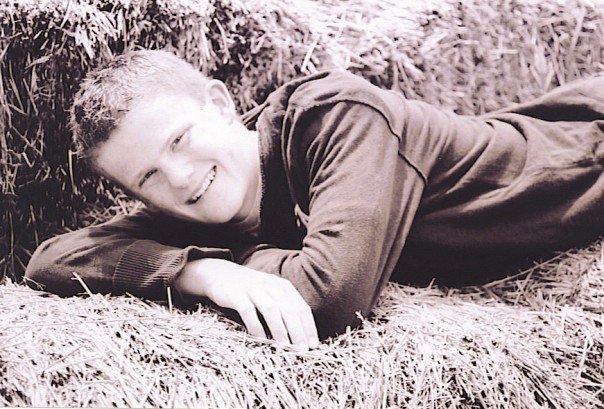
Gay and Christian [The Early Years]

Since my post on Growing Up Gay and Christian was so popular, I’ve decided to write a more in-depth series about my childhood experience with regard to my faith and sexuality.

[The Early Years]

I grew up in an Evangelical home. For those of you who don’t know what evangelical means, it means different things to different people. But, for the most part, it means that I grew up believing the Bible was without error. I grew up believing that men were the head of the household and that women couldn’t be pastors. I grew up believing it was my job to convert as many people as I could, to show as many people I could the love of Christ so that they would accept Him as their personal Savior and be saved. No small feat, that last one. But most importantly for this post, I grew up believing that being gay was a sin and that I’d burn in hell for having same-sex attractions.

Granted, I didn’t know most of this when I was only four or five trying on my mother’s heels and pretending to be a girl. I’d wear one of my dad’s bandannas around my head with a rubber band tying the back of it into a ponytail. I’d wear ‘my hair’ as I ran laps around the house and played basketball in the dining room. I would record the scores from my imaginary friends (who I was acting as) and then compete as myself. While I wasn’t an only child, it felt like it at times with my closest sibling being 8 years older than me. Left to my own devices, since a 13 year-old rarely wants to play with a five year-old, I created all sorts of fictitious friends and scenarios to help me cope with my early childhood.

I remember being yelled at to take ‘that thing’ off my head when we sat down for dinner, but I’d cry out, “But it’s my hair!” I think I usually won that argument. I remember (and have been told on many occasions) when I was around four or five, my sister gave me her Mardi Gras beads. In front of her and her then boyfriend, I said, “Great! I can use these when I act like a girl!” Then I whipped my head directly towards her boyfriend and said seriously, “I do act like a girl,” and pranced off. On occasion I would play house with friends who would come over and I’d choose to be the woman (because I had no notion that two boys could represent a household). I’d put balls up my shirt to complete the womanly look I had created for myself: blue bandana wrapped around my head with breasts so large they’d break any woman’s back in real life. This seems hilarious and crazy to me now. I could just imagine seeing my five-year old self now and shaking my head in response while laughing.

But, now I would understand it. I would understand the need to try on a different part of myself that society and the Church wouldn’t let me. I’ve talked with other gay men about this and of the people I’ve talked with, we’ve all shared similar experiences. What perplexed me at first about this was that none of us identify as transgender. But the more I thought about it, the more I realized I wasn’t exploring my gender as much as I was exploring my sexuality. At that age, I had yet to discover a same-sex couple or understand what that meant. I didn’t think that two men could be married and running a house together. I wanted to pretend to play house with another boy, but because two boys couldn’t do that, I took on the ‘look’ of the girl.

As far as putting on ‘my hair’ and competing against myself goes, I’m not totally sure. My only imaginary friends were girls and they were all my sister’s friends, just ‘Little Dana’ or ‘Little Erin.’ I took what was in my life and made it imaginary and small so that I could have company all the time. And since I had no one to compete against, I had to compete against myself (or rather my imaginary friends.)

I’m still recovering from The Patriarchy. As I grew up, I learned that little boys weren’t supposed to try on ‘girl’ things. I learned we weren’t supposed to cry and show our emotions in public. I learned that meant we were weak. I learned that we weren’t supposed to want to be close with another boy like we were supposed to be with a girl. I learned that we don’t talk about our sexuality, that it makes people uncomfortable. I learned that my desire to play house with another boy was wrong because it wasn’t in God’s design for human culture. Well, friends, I can tell you that is a load of bullshit.

I play house with another man every single day of my life now and it’s one of the most beautiful and rewarding and authentic things I do. We cook together and we clean together (except I clean the bathroom and he cleans the bar cart). We play games and sit reading on the sofa next to each other. We share our money and pay our bills together, both making money and working so we can enjoy our shared lives. We make so many decisions together as we craft our home and intertwine our lives. I wish I could go back in time and tell 5 year old Timmy this. I’d tell him that it’s okay to be different. It’s okay to wear your ‘hair’ and pretend to be a girl. It’s okay to want to play house with another boy, because that’s what you’ll end up doing for the rest of your life. I want to tell him that two boys and two girls all over the world play house together, that you’re not alone. I’d want to say that even though your dad yells at you to take off that bandanna at dinner, he’ll be at your same-sex wedding with a big smile on his face congratulating you on your marriage. I’d tell him that your family loves you for who you are and you’ve already made friends with some of the people that’ll support you through your coming out and coming to terms with yourself.  I’d tell him that God loves you just the way you are.

If you feel comfortable, leave a comment below telling me about a similar experience you’ve had as a child. I’d love to hear other stories and anecdotes from all of you.

Be sure to follow my blog (at the bottom right of the page) to receive e-mail updates when I post the next pieces in this series.

Growing Up Gay and Christian

I recently read The God Box. It’s about a young man in his senior year of high school coming to terms with his sexuality in the context of his evangelical Christian faith. My husband has been wanting me to read this book for a few months now, and he finally got it from our library so that I could read it. I loved it. Besides the main character’s identity issues as a Mexican American, I resonated with other aspects of his story, like his struggle to reconcile faith and sexuality and his inability to tell anyone about his same-sex attraction. It felt both healing and jarring to enter back into that particular way of thinking, of thinking that I’d go to hell for accepting the “homosexual lifestyle,” of thinking that all gay people did was sleep around with each other, of thinking that my attraction would never go away so that I could fully be with a woman.

I remember nights writing in my journal, angst strewn about the pages: angst about my sexuality, angst about the boy I liked, angst about my looks, my weight, my hair color, angst because teenagers are already full of angst. Throw an evangelical Christian boy in a small, Midwestern town and the recipe for angst is overwhelmingly potent. I remember too many tears, too many fears, too many nights wondering how I could go on praying for change and yet continuing to feel the same attraction over and over. I remember two different people living inside of me throughout high school.

I remember being preached about or talked about at church when no one knew they were talking about that good little Christian boy who was a leader in the youth group. Gay people were always somewhere else. They were always somebody else. And they were always infringing upon the sanctity of marriage, the greatest threat to the family in the U.S. (No, we never talked about adultery or physical abuse or rape within a marital context or a crippling notion of masculinity or femininity as the greatest threat to the family.) I remember the derogatory names whispered and coughed at me in school from the select few who couldn’t deal properly with their own masculinity, so they took it out on others. I remember trying so hard and fighting my attraction with fervor only to find it growing stronger in response to my prayers and petitions. It’s as if God was saying, “You say, ‘Take this away.’ But I say, ‘Love yourself for who I created you to be.'”

I have also been reading Rachel Held Evans’ Searching for Sunday in which she talks about leaving the evangelical Church. It’s continuing to heal me from the hurt and pain inflicted upon me by my faith growing up. She also talks about loving what evangelicalism gave her. While I’m still trying to figure out what I love about evangelicalism, I do know that I’m thankful for growing up in the Christian faith. While I have deconstructed that childhood faith, I wouldn’t have the pieces to begin constructing a faith life now if I didn’t first have it given to me from my parents.

The most important part of my journey in faith and sexuality has been to love myself. I walked away from faith in high school and began learning how to love myself, how to say “no” to destructive forces in my life. It was my first lesson in saying “no,” and thank God I did. As I learned to love myself, I came to find God again. And I found God where God had always been, right beside me loving me for all that I am and smiling that I was finally on the road to accepting myself for who I was created to be. For anyone struggling with understanding and accepting their sexuality, their gender identity, who they feel they are on the inside, especially in the context of faith or particularly evangelical faith, the best advice I can give is learn to love yourself for who you are. You are deeply and fiercely loved by the God of the universe just as you are.

Thank God I’m no longer where I was in high school. Thank God for the saints in my life who led me down a Christian walk that allowed me to find my identity as a Christian and as a gay man compatible. Thank God for the people who have loved me through my faith journey, who have loved me through coming out and coming to terms with my orientation. Thank God for the people who have stuck with me every step of the way. Thank God for changing hearts and minds and opening up people to love me better. Thank God for my husband and for our story of friendship and love. Thank God for young adult fiction with gay characters who tell our children that it’s okay to be different, that it’s okay to be gay or transgender or anywhere on the spectrum of sexual orientation and gender identity. Thank God that people are starting to pay attention and that LGBTQ people’s lives are being rescued from suicide. Thank God for love that wins out at the end of the day. Simply, thank God.

Coffee Talk

In the tradition of the different Biblical perspectives of Jesus and the continued tradition of the saints who have gone before me, I’m writing about where I think Jesus lives today. I’m writing about where I find Christ shine through most in the world, through the vulnerable, through society’s “least of these” lens, through people who have gone through hell for being truthful and loving to themselves in spite of the world’s hatred for them. I want to thank Matthew, Mark, Luke, John, and Paul for their varied depictions of Christ, of their differing perspectives and their differing opinions of Christ. I want to thank all of those whom I have read or encountered who have helped me see Christ differently and therefore have drawn me closer to the Christ found in Scripture and to the Christ found in all of creation: Paul Young, Katherine Sakenfeld, Edwina Sandys, Kwok Pui Lan, John Howard Yoder, Alice Walker, Katie Manning, Jeff Eaton, and Ruth Huston.

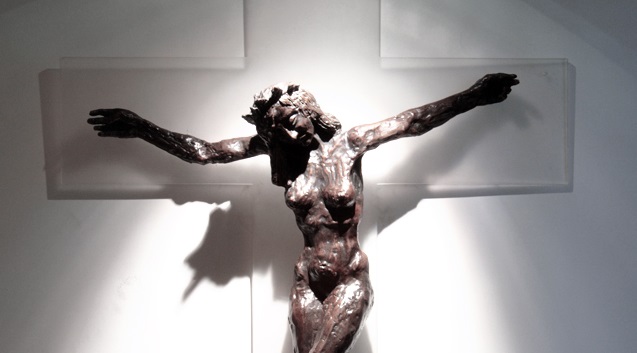
I met Jesus at a quaint indie coffee shop in the burbs yesterday. She looked so out of place. I loved it and hated it. I felt uncomfortable by her presence and so overwhelmed by her beauty, her love for herself, her daringness to meet me in my own comfortability. I felt ashamed. Why couldn’t I travel to her side of the tracks? My own damn white middle-class privilege keeps me from meeting Jesus where she feels most comfortable. Damnit. Next time. Next time I’ll go find her and stop making her meet me on my turf.

“Hi darlin’,” she says to me and smiles over her coffee.

“Hi Jesus,” I smile at her dark skin, her chocolate brown eyes, and her strong jawline. She is the most beautiful human I have ever laid eyes on.

The white couple sitting next to us look uncomfortable. I can’t decide if they’re more uncomfortable by her blackness or her transness.

She’s growing her hair out in a big afro. It’s divine.

“Girl, stop staring”

“Sorry, Jesus. Your hair is simply amazing.”

“Why thank you,” she puffs up the bottom of her afro with a proud look on her face. “But that doesn’t get you off the hook.”

“What hook?” I ask, guiltily.

“For not coming to my home today.”

I look down, ashamed. “I know.”

“And don’t you be playing the victim, here. You know you aren’t the victim. Get your head up.”

I look up and stare her straight in the eyes. She’s smiling, but her hard eyes tell me she’s not having one bit of the pity party I’m throwing for myself.

“Okay,” I say, not sure what topic to broach first.

“How’s the transition going?” I ask, hoping I’m not being too invasive.

“It’s going. Most people don’t question me anymore. I had some woman the other day ask if I was a man or a woman. I told her I was a woman, but that it wasn’t any of her damn business. She looked like she didn’t believe me. So I asked her if she wanted to see my lady bits.”

I gasped and laughed at the same time, “No?!”

“Oh yes. Respectable people,” she does air quotes around respectable, “want to control your every move, but are scandalized when you call them out on it. They’d rather keep people down, keep you underneath and behind them than acknowledge your equalness, but they want to do it in a subtle way. They don’t want to seem like an outright racist or bigot. They don’t understand they’re caught in a system that encourages them to be so.”

“I know, I’m sorry.”

“I don’t want your apologies, mister. I want your heart and your mind and your actions to be different. I want you to stand up for me and for my people.”

I feel myself bristle at her term ‘my people,’ offended and sad she doesn’t include me in ‘her people.’

“Oh, stop it.” She snips.

“Stop what?” I ask defensively, trying to hide the emotions on my face. She can see right through me.

“Feeling sorry for yourself. You know you’re my people, too. But, you also know I’ll always take the side of the oppressed, of the ones who aren’t protected by society, by the laws of the land, by the Church, which by the way is supposed to follow after me. But, somehow, they keep moving out and building buildings away from all the people I’ve chosen to surround myself with. And you know, sometimes you’re the one I’m defending, but usually I’m having to defend others against you, you know that.”

“I’m trying to know that and I’m trying to change that.”
She softens a bit, “I know that, honey. But, you still have a long way to go.”

“I know,” I say, trying to not throw a pity party for myself, but also trying to feel rightfully repentant for my actions, but mostly for my silence and non-action in the all moments I should have spoken up and done something.

“Girl, let’s go for a walk and get out of this,” she looks around eyeing all the people staring at her like she doesn’t belong, ”place. Let’s hear the birds talk to us and see the trees waving back.”

I smile. I love the way Jesus talks about the birds and the trees, like they’ve got hearts and souls they’re trying to share with us.

“Sounds good,” I smile as we trade the stuffy coffee shop for the refreshing breeze and blue sky.

Photo above is the sculpture Christa by Edwina Sandys.

To My Younger Self

Dear 15 year old Timmy,

I just read a book that you would love and hate. Morally, you would be so utterly opposed to this young adult novel that I just read. You’re so young and naive and you think you’ve been wired incorrectly, that God did something wrong to you in the womb. You think you know how you’re supposed to be, to live, to act. But, you’re wrong. You’re attempting to live out a lie, a falsehood. You are, in fact, rejecting God’s good creation when you keep trying to change yourself, make yourself different than the way you were created. Oh Timmy, how can I make you understand?

Read this book. I know, two young men fall in love, and you’re going to be so intrigued and turned on by it, and at the same time you’re going to be disgusted with yourself for feeling that way and therefore, hate the book. But please, read it. Give it a chance. Give love a chance. Give yourself a chance to be a normal teenage boy. You’re growing up too quickly because you’re dealing with pain even grown people shouldn’t have to deal with. You’re trying to ignore and change and tamper with the very fundamentals of who you are. Please stop hurting yourself in the name of God.

I want you to know that there is hope. There is hope when love is shared. There is hope when you learn to love yourself. There is hope when you learn to let that love flow through your freckled face that hates the way the sun kisses you, through your strong legs that run your pain away, through your wrist that you try to keep strong and straight. There is hope when you learn to love the things about yourself of which you are so ashamed. There is hope when you learn to let out those things which are hidden, when you usher them out of the closet no matter what anyone else might say or think.

I want you to know how brave you are. You’ve got more bravery than you know. Let me tell you about all the times you will tell a family member, a friend, a professor, a complete stranger about your sexuality, about your future husband. Let me tell you about the hard conversations that you plow through in the name of love, because that’s what God does, plow through in the name of love. Let me tell you about all the change and growth and goodness that are in store for you. Let me tell you about how it will be so much easier and so much harder than you think. Let me tell you about how beautiful your wedding is going to be, and that you’ll marry a handsome, funny, charming man that you grew to love as more than just a college friend. Let me tell you about how hard it will be to introduce him to your extended family who only knew you as a ‘good little Christian boy’ (implying that Christian and gay don’t go together, which I have now come to believe they most definitely do). Let me tell you how you’ll read this book I’m giving you and it will give you courage to be more yourself than ever before.

You have it in you. And you have it all around you, little Timmy. You have love and compassion and passion and courage and bravery all bottled up inside you for everyone else. Drink deep from that bottle for yourself, for you’ll need it to face the world with all its love and hate. You have all that you need inside yourself and from those around you. You have some strong friends and family to lean on and you’ll find even more friends with an uncanny ability to love, ones that lift you up rather than tear you down. You have people who are going to celebrate with you and mourn with you like you’ve never imagined. Drink it up, because they are good, good people and they will love you well. You have a loving, passionate God who wants nothing more than to see you whole and well and it might hurt like hell sometimes, but cling to God, for God will give you strength. When you want to walk away, remember to always come back (I know you will, since I did), but just know that God loves and heals and mends and makes whole that which is broken. God won’t change your sexuality, because it’s not broken. But, God will mend your broken heart and will heal the hurt from the Church so much so that you’ll go to Seminary and hope to find leadership in a church some day.

I know high school is wonderful and shitty at the same time. That’s okay. I want you to know that it will take time, but life does get better. Just keep learning how to love all the parts of you that you’ve grown up learning to hate. It might take a lifetime to love yourself and be yourself fully, but it will be a life well spent.

I love you dearly,

25 year old Tim