Learning Communal Lament

For Lent, our church is going through the book of Lamentations, which consists of five poems all centered around the occupation and exile of Judah by the Babylonians. The temple, which for the people of Judah, is where God resided was destroyed, leaving the people lamenting the destruction of the house of God. Where does God go when there is no home for God? Does God leave a people when there is no dwelling place? Did God leave them before and the Babylonians were their punishment? These are some questions with which Lamentations is beginning to grapple.

Lamentations is a book about grief. It’s a poetic representation of our communal grief. How do we grieve things together? It’s a book that allows us to be angry with God, to blame God, even if God is not at fault. There is room in our grief for anger. There is also room in our faith for this kind of grief and anger. The book is about a group of people who have been destroyed and occupied. It is a book about a group of survivors dealing with trauma.

Our pastor has been bringing out the individual nature of grief. What are we grieving this Lent? What do we need to do in order to properly grieve? This is important. It is important to learn how to grieve and to do it well. It is also important for us to learn how to handle other people grieving, how to give them space to be angry, to cry, to blame God, to question God, regardless of where blame ought to lie. These are all good things for us to learn.

My mind, however, immediately went to thoughts about communal grief, particularly as a white male. I am someone who benefits both from my whiteness and my maleness. How can I, as a white person, identify myself in the story of Lamentations? I do not grieve the destruction of white people. My white ancestors are the ones who destroyed entire nations of Native Americans and have occupied their lands for hundreds of years. My white ancestors are the ones who enslaved Africans and brought them to the Americas. I do not identify with those lamenting in this Scripture. I identify with the descendants of those who did the destroying, occupying, and enslaving.

Therefore, I am left wondering how to grieve the sins of those who came before me. How do I grieve white supremacy? How do I sit with the grief that I benefit in numerous ways because of my whiteness that black and brown skinned people do not? I’m left feeling angry at the injustice. I’m left feeling frustrated with my own complicity in the ransacking of the Temple, in the systematic oppression of black people in the U.S. In the past I have felt defensive and thought things such as: I didn’t enslave anyone. I didn’t kill anyone, incarcerate somebody, or enact racist laws. But, I must contend with the fact that I benefit from white people who did. I am in a place of privilege because white people before me did those things.

While I feel disconnected from white people as a racial identity, I must also acknowledge that I am intricately linked to all the white people who came before me. In lieu of the Old Testament, I must learn what it means to ask for communal forgiveness for what my white European ancestors did to Native Americans and African Americans. I must learn how to claim those as my people and to repent for their sins. I must learn that I don’t get to pick and choose the community I came from, that I don’t get to pretend their sins don’t benefit me now.

While Lamentations doesn’t feel like a book written for me to give lament to my own individual grief, it is a book that is giving me new eyes to see those who are grieving. It is giving me lenses to see those who are lamenting, those who are crying out for justice and for equality and to be seen and heard in a country where their voices have been stifled. Lamentations is giving me the chance to sit down and be quiet while I listen. I pray that this book continue to shape me, to give me eyes to see oppression in new ways. I pray that either this book or another book in Scripture help me find the communal language to ask forgiveness, to repent, and to seek wholeness with those whom my ancestors have destroyed.

Just Speak English

Often I have heard this refrain from people who advocate for integrating into U.S. life. People say, “When you’re in America, speak English.” There is the whole problem of U.S. Americans referring to the U.S. as simply America or U.S. citizens as Americans, but we’ll get to that later. Right now, I want us to focus on speaking English, the language some people are adamant that we should speak when we are in the United States. I have often heard this from older generations, sometimes younger, but mostly older. I live in the middle of the U.S., so it’s mostly from older white folk who for most of their lives have lived around other white folk who only speak English. It was what they grew up speaking, some might have even studied French or German in high school, but nothing further.

I grew up differently than generations above me. Spanish was the only language offered in my small town high school, so that was the foreign language I studied for four years. I have heard fears that Spanish will overtake English so much so that road signs in the Midwest will begin appearing only in Spanish. Fear is alive and real in the phrase “Just speak English.” The root of the emotion is not indignation or pride or righteousness. It is fear. It is fear of the unknown, fear of not being able to communicate with the world around oneself. It is the fear of not being able to navigate a world that for sixty-two, sixty-five, seventy years made sense. It is the fear of growing old in a world that used to be familiar, but is no longer one that is recognizable or navigable. To be in a world where written and verbal communication is limited and the majority of people don’t know sign language would be a difficult world to live in. I can understand that would be terrifying for people growing up in a time without much globalization.

Now to the folks who use the phrase, “Just speak English,” I would ask that you attempt to understand that very fear yourselves. I’d ask that you imagine a life so difficult and bleak that you immigrate to a different country. Your options feel so dire that you would pick up your whole life and move across the border or the ocean or the world. Maybe practicing Christianity is now against the law or you’ve fallen on hard times and there seems to be no way out of poverty. So, you pack up a few belongings and take your spouse and children with you in search of freedom and prosperity.

When you arrive in this new country you find that you are surrounded by people who look different from you, feel different to you, and speak a different language from you. You’ve heard how this country is so prosperous, such a great place to raise a family and pull yourself out of poverty. You’ve heard all these stories and then when you get there, you have to deal with the reality that nobody can understand you and you cannot understand them. When you finally find a job, it’s one low on the totem pole in society, and mostly other people who occupy those spots are people similar to you, immigrants. They are people who speak a different language from the majority and oftentimes it is the same language as you. You feel at home around these people because you can communicate with them. You also cannot get a different kind of job. You’re working 40 hours a week, if not more than that, to put your children through school. You might even be working two different jobs, attempting to give your children a better life than you had.

Meanwhile, your children are learning that country’s language because they’re surrounded by it each day. They hear it spoken from their teachers and peers, read it in their textbooks, and listen to it at home while watching television. Their minds are young and far more malleable than yours. Language seeps in and soon it becomes the main language in which they communicate and you find it hard to communicate with your own children. You’re working so much that you don’t have the time, the finances, or the energy to take a language class or buy resources to help you learn the language. And really, you’re there to give your children a better life and so your own wants and desires take the backseat to your children’s success. Can you imagine how difficult that would be? Can you imagine how that might feel?

Then add to it that people from the country tell you to ‘just speak the language.’ They yell at you in the grocery store or you hear politics on the tv and they’re shouting at you to ‘learn the language or go home.’ Can you imagine the feeling? Can you feel the heartbreak? The disappointment? The despair?

Now, take these feelings and transform them into empathy. Try to understand the feelings of people who immigrate to the U.S. Try to put yourself in their shoes and understand that most of these people are not malicious; they’re simply trying to make a better life for their families. Try to understand their own fears, their own worries, and their own frustration and confusion and fear in trying to communicate with English-only speakers. Try to understand that when we tell people to ‘Just speak English,’ there are a host of reasons why it might not be that simple for them. Try to understand the hard work immigrants are bringing to our country, the effort they’re putting into working and living and making the best life they are able for their family.

If we can understand a little bit how their journey is already difficult, we might learn that we don’t want to make it any harder. We might find that empathy and compassion have a place in our society. We might find that we value empathy and compassion along with hard work. We might find ourselves growing empathetic to the situation of immigrants, particularly of refugees who have fled direct persecution for some reason or another. We might even find it in our collective consciousness that the U.S. has always been rumored to welcome foreigners, to welcome ingenuity, hard work, the prospect of making life better for one’s self and one’s family. Whether or not those rumors are true (because we have a notorious history of actually treating immigrants awfully), these ideas remain in our periphery and are important values to bring into focus.

Now, I would like to address our use of language concerning America and American. Precision of language is important, especially in the way we refer to ourselves and others. Because there are over 30 countries part of the Americas (North and South), it is highly misleading to say that ‘you’re in America, speak American’ or ‘you’re in America, speak English.’ The United States of America is but one country of many in the Americas and when we say America or Americans to refer exclusively to the United States, it places us at the center of the West. It adds to our collective ego and pride making it harder for us to understand other countries in the Americas as our equals. Instead, this language unconsciously or consciously places other countries beneath us. If you feel the need to be exclusionary, then say “You’re in the United States, speak English.” However, that is still misleading since we have never declared an official language. The beauty of our country is that anyone ought to be welcome and to bring their language and culture with them. We can learn loads from other peoples and cultures. Ours is a country that is stronger when we are not only diverse, but when we embrace and celebrate our diversity. Celebration of our diversity has the power to bring us together while fear of each other’s differences serves only to weaken us.

So, I ask for you to consider empathy. I ask for you to consider understanding. I ask for you to consider diversity a good thing, that it’s never too late to learn from someone else what it means to be human and to be truly alive. I ask you not to be blind to our differences, but rather to celebrate them, lift them up and hold them tight while we dance and sing and hold each other’s hands. Because let’s face it, we’re all in this together. And if we can’t do this together, it’s never going to get better.

On Being Wrong and Jesus

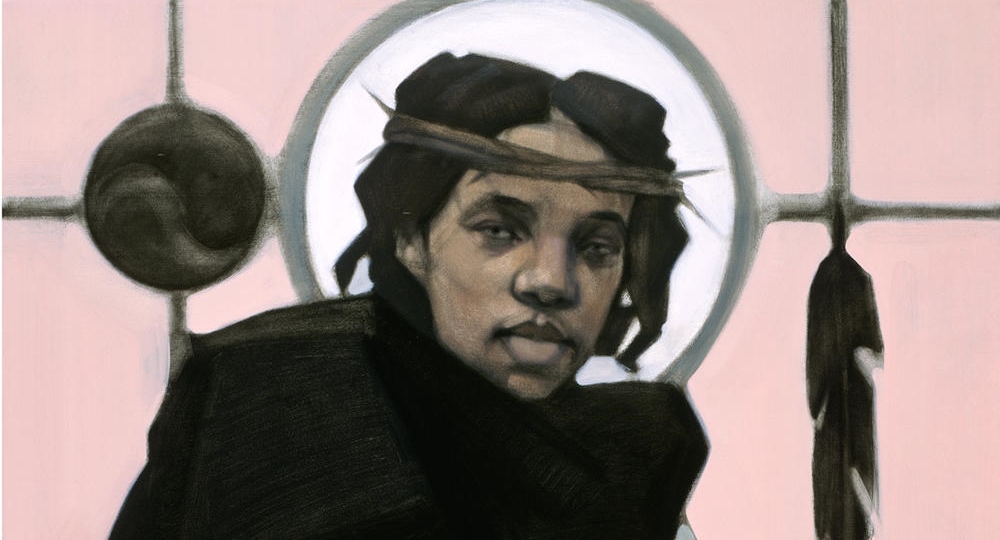
In my last blog post, I wrote about having a conversation with Jesus, a black, trans, woman Jesus. She was bold, beautiful, and unapologetic, because that’s who Jesus was and is and will continue to be. Throughout the past few years, I’ve been going through a lot of theological overhaul of the Gospel I grew up with. When we are young, our understanding of God and of faith and of the world don’t mesh as we grow up. Our understandings become more complex. They take on a dimension and depth with which we could not comprehend in our small years of life on earth. With that said, I also realize that my understanding of faith and God and the world will probably evolve over the next fifty years of my life and I will look back on this time and think I was so simplistic, so naive in my worldview. But, I have what I have right now and that’s what I’m working with.

Over the course of twenty-five years of life, I have come to find that being wrong is a normal part of life, no matter how much we hate it or attempt to evade it. I have spent my fair share attempting to never be wrong, and when I was, to admit it without admitting it. I would like to think that I have come to a place where I can admit I’m wrong fairly easily. But, as my husband has pointed out many times, it takes a lot of effort to prove me wrong. Our relationship has a little too much of me saying, “Hmmm,” and him pulling out his phone to look it up. I’m a natural skeptic, what can I say!? I’ve grown this way out of self-preservation. My sister once (actually, every other week of my childhood) told me I’d get my period some day because even boys have periods. My brother once told me I had an older brother who had drank the chemicals under the sink and died before I was born (This was utterly untrue). They all woke me in the middle of the night when they’d gotten home from a night on the small, small town we grew up in and told me I was late to go fishing with my dad. I frantically threw clothes on before looking at the clock and realizing I had another four hours of sleep. All of this is to say that I now need it proved to me before I admit I’m wrong, and then I’ll gladly admit it. But until then, I’ll not believe a word. Because family.

But also because education. When I learned that Jesus wasn’t white, I was shocked! When I learned God wasn’t a man, it felt like a dream come true! When I finally believed that the universe was billions of years old, my understanding of God grew exponentially. When I learned how to read the Protestant Bible as a collection of 66 books written most likely by all men a long, long time ago, it dramatically shaped my view of my faith in the best way possible. It became more complex, more nuanced, filled with a richness I had yet to know in my faith. All of my learning to let go of the wrong things I grew to know as a child was freeing, exhilarating, and incredibly frustrating. I so wanted to cling to what I knew, to the thought that I was right and had it all figured out. But what wrongness and approaching life without knowing all the answers can teach us most is humility.

All of this learning to be wrong inspired my last post. My faith has taught me that Jesus shows up to the world in its least likely places, in the places where oppression is fiercest or where it is most insidiously subtle. The Scripture surrounding Jesus portrays him as a Jewish male who is attempting to overthrow the Roman Empire with the Kingdom of God. Jesus is part of an oppressed group of people forced to pay taxes and homage to the Empire and to be subject to their ruling. As much as Jesus is for life and enjoying it to the fullest, he was also against those who would take life away from others. Jesus opposed oppressive forces in his day.

My reading of Jesus in Scripture begs me to see Jesus in our society today. It begs me to understand the forces that are at work all around me, both life-giving forces and oppressive ones. It makes me dig deeper into myself to find where I fall in both of those categories because we most often fall in both categories to some extent. This is when I find that Jesus would show up today and look very different from me. I am a white, cisgendered (meaning my self-identification as a male matches my biological sex), middle-class male. Besides the fact that I am gay, I sit pretty high on the ladder of privilege in our society. And on the topic of gayness, being a white, cisgendered, male is still unfortunately the highest rung on the ladder of privilege in the gay community.

I find that Jesus would not look like me, would not sound like me, dress like me, or express herself like me. Jesus does not have to be a man to save us. Jesus could show up in a woman’s body and save us just the same. She would be loving and self-sacrificing and yet angered by injustice and refuse to sit down and shut up. She would chant that black lives matter, because they do. Not because they matter more than white lives, but because Jesus would demand that they have a seat at the table just like everyone else. She would be demanding gender neutral bathrooms so that trans people could feel safe and loved and included in society. She would be railing against any law that allowed religious groups to refuse service to lgbtq folk. She would be outraged by any system calling for the registering of Muslims in the U.S. Jesus would be in our midst loving us in her fiercest way possible to change for the better. Jesus rarely talks about easy stuff in the Gospels and I imagine if Jesus came today, she would be just as radical, just as political, just as sharp and witty and full of love as he is in our Gospel accounts in Scripture. Jesus brings the Good News. And the Good News for me is that sometimes it’s good to grow up and find out I was wrong. And it’s good to fight for those with less privilege and rights than me, for that’s what Jesus would do. That’s the Jesus I find in Scripture and that’s the Jesus I find when I look in the eyes of people who are different from me.

Coffee Talk

In the tradition of the different Biblical perspectives of Jesus and the continued tradition of the saints who have gone before me, I’m writing about where I think Jesus lives today. I’m writing about where I find Christ shine through most in the world, through the vulnerable, through society’s “least of these” lens, through people who have gone through hell for being truthful and loving to themselves in spite of the world’s hatred for them. I want to thank Matthew, Mark, Luke, John, and Paul for their varied depictions of Christ, of their differing perspectives and their differing opinions of Christ. I want to thank all of those whom I have read or encountered who have helped me see Christ differently and therefore have drawn me closer to the Christ found in Scripture and to the Christ found in all of creation: Paul Young, Katherine Sakenfeld, Edwina Sandys, Kwok Pui Lan, John Howard Yoder, Alice Walker, Katie Manning, Jeff Eaton, and Ruth Huston.

I met Jesus at a quaint indie coffee shop in the burbs yesterday. She looked so out of place. I loved it and hated it. I felt uncomfortable by her presence and so overwhelmed by her beauty, her love for herself, her daringness to meet me in my own comfortability. I felt ashamed. Why couldn’t I travel to her side of the tracks? My own damn white middle-class privilege keeps me from meeting Jesus where she feels most comfortable. Damnit. Next time. Next time I’ll go find her and stop making her meet me on my turf.

“Hi darlin’,” she says to me and smiles over her coffee.

“Hi Jesus,” I smile at her dark skin, her chocolate brown eyes, and her strong jawline. She is the most beautiful human I have ever laid eyes on.

The white couple sitting next to us look uncomfortable. I can’t decide if they’re more uncomfortable by her blackness or her transness.

She’s growing her hair out in a big afro. It’s divine.

“Girl, stop staring”

“Sorry, Jesus. Your hair is simply amazing.”

“Why thank you,” she puffs up the bottom of her afro with a proud look on her face. “But that doesn’t get you off the hook.”

“What hook?” I ask, guiltily.

“For not coming to my home today.”

I look down, ashamed. “I know.”

“And don’t you be playing the victim, here. You know you aren’t the victim. Get your head up.”

I look up and stare her straight in the eyes. She’s smiling, but her hard eyes tell me she’s not having one bit of the pity party I’m throwing for myself.

“Okay,” I say, not sure what topic to broach first.

“How’s the transition going?” I ask, hoping I’m not being too invasive.

“It’s going. Most people don’t question me anymore. I had some woman the other day ask if I was a man or a woman. I told her I was a woman, but that it wasn’t any of her damn business. She looked like she didn’t believe me. So I asked her if she wanted to see my lady bits.”

I gasped and laughed at the same time, “No?!”

“Oh yes. Respectable people,” she does air quotes around respectable, “want to control your every move, but are scandalized when you call them out on it. They’d rather keep people down, keep you underneath and behind them than acknowledge your equalness, but they want to do it in a subtle way. They don’t want to seem like an outright racist or bigot. They don’t understand they’re caught in a system that encourages them to be so.”

“I know, I’m sorry.”

“I don’t want your apologies, mister. I want your heart and your mind and your actions to be different. I want you to stand up for me and for my people.”

I feel myself bristle at her term ‘my people,’ offended and sad she doesn’t include me in ‘her people.’

“Oh, stop it.” She snips.

“Stop what?” I ask defensively, trying to hide the emotions on my face. She can see right through me.

“Feeling sorry for yourself. You know you’re my people, too. But, you also know I’ll always take the side of the oppressed, of the ones who aren’t protected by society, by the laws of the land, by the Church, which by the way is supposed to follow after me. But, somehow, they keep moving out and building buildings away from all the people I’ve chosen to surround myself with. And you know, sometimes you’re the one I’m defending, but usually I’m having to defend others against you, you know that.”

“I’m trying to know that and I’m trying to change that.”
She softens a bit, “I know that, honey. But, you still have a long way to go.”

“I know,” I say, trying to not throw a pity party for myself, but also trying to feel rightfully repentant for my actions, but mostly for my silence and non-action in the all moments I should have spoken up and done something.

“Girl, let’s go for a walk and get out of this,” she looks around eyeing all the people staring at her like she doesn’t belong, ”place. Let’s hear the birds talk to us and see the trees waving back.”

I smile. I love the way Jesus talks about the birds and the trees, like they’ve got hearts and souls they’re trying to share with us.

“Sounds good,” I smile as we trade the stuffy coffee shop for the refreshing breeze and blue sky.

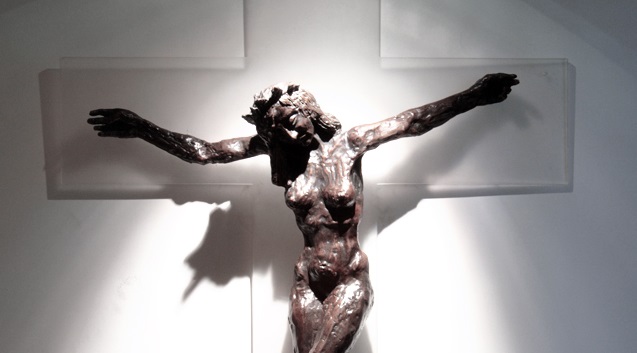
Photo above is the sculpture Christa by Edwina Sandys.

On Being White and Loving Beyoncé

I am a white male. And I love Beyoncé. I fell for her back in 2008 when she released “I Am… Sasha Fierce.” Yes, I know, I was way late to the game. But I only listened to Casting Crowns and Steven Curtis Chapman the first 16 years of my life. I lived a sheltered life. However, If I Were a Boy, Halo, Single Ladies, Diva, Sweet Dreams all got me going, but after hearing her pipes on Ave Maria, I about lost my mind every time I hit ‘repeat.’ Then she released 4 with Run the World and Love On Top and Best Thing I Never Had. Watching her video for Run the World was like watching your favorite heroine kick ass, but then watching her in Best Thing I Never Had almost turned me straight. Friends of ours like to say that everyone is Beyoncésexual. I have to agree.


Then she did the unthinkable: dropped an album without any promotion and it went to number 1 on the charts overnight. It wasn’t just any music album, it was a video album, complete with a video for every single song on the album. And I would argue that it was her best album to date. Many claimed she explored ‘darker themes’ in this album, but I just called them ‘real life’ themes. She sings about depression, motherhood, unnatural beauty standards this country places on women, feminism, women empowerment, and making love with her husband. She brings her full self as a woman into this album and it is Flawless. I remember listening to that track for the first time driving to dinner with the same friends who say everyone is Beyoncésexual and thinking, “This is everything.” She critiques patriarchy in Flawless and explores the depth of depression caused by patriarchy in Pretty Hurts. And while I am not a black woman, I am a gay man and I have suffered from patriarchy in my own ways, from the need to be the ‘perfect (straight) man’ and the need to be someone I am not. Her lyrics, melodies and videos affected me deep in my bones because I either found myself in them or raised my fist with her in protest and danced in celebration.


A week and a half ago, she dropped the new song and video Formation the day before the Superbowl and it is spectacular. It is woman. It is black. And she is unapologetic about her womanness and her blackness. Thank God. Then, she performs a part of it at the Superbowl and she is both praised and ridiculed. Her outfit pays tribute to Michael Jackson, the King of Pop, a black man. Her backup dancers wore outfits that paid tribute to the Black Panthers, a group often villainized during the 60s and 70s by the media and government for empowering black people.


Beyoncé’s performance evoked images of blackness at the Superbowl and it upset people, mostly white people. While some white people will say they’re upset because Beyoncé brought politics into the Superbowl or that her performance was anti-cop, I believe they are mistaken. They are upset that Beyoncé brought her black woman body into their presence and had to acknowledge her. They are upset that Beyoncé showed up and didn’t pretend to be white. Her lyrics have nothing in them about police, about being anti-cop. Only her dancers’ Black Panther attire could be referred to as being anti-cop, and that too is a stretch because they were an activist group, not an anarchistic group.  Her video points towards ending police brutality with images and writing on a wall that says, “Stop shooting us,” but her lyrics do not. Also, allow me to point out that being anti-cop is different than wanting police reform and refusing to accept police brutality as a norm. Furthermore, people accused her of making her performance political. If people mean that she brought politics into it by singing about her blackness, then yes, she brought in politics. But it’s disturbing to me that singing about one’s skin color and culture and heritage is political. It’s disturbing to me that when a black woman decides to sing about being a black woman, she is villainized and accused of being political (in a negative sense). When a black woman is asked to sing in front of millions of people on television, we are going to see a black woman singing on t.v., and that means she’ll show up with all of her black woman experiences.


It’s time for white people to calm down and actually listen to the stories black men and women and children are telling us. It’s time for white people to stop being afraid of losing their privilege and power so that everyone who’s at the dinner table can have a bite to eat. It’s about damn time white people in the U.S. stopped hating on a woman because she’s a woman and a black person because she’s a black person and a black woman because she’s a black woman.


Thank you Beyoncé for being you. Here’s Formation in case you haven’t seen the video: https://vimeo.com/154783794

Thank you Jessica Williams for your spectacular account of Beyoncé’s performance here: http://www.cc.com/video-clips/j79s76/the-daily-show-with-trevor-noah-beyonce-s-halftime-show-message

Thank you SNL for this laugh that is simultaneously sad and hilarious and insightful: https://www.youtube.com/watch?v=ociMBfkDG1w

For Colored Girls

This past Sunday Reed was working, so I decided to plop down on the couch and watch a movie (for he rarely is up for watching anything.) Yes, I know, I have it rough. This particular Sunday I decided to watch For Colored Girls in honor of Martin Luther King Jr. and the day many have off because of his steadfast, hard, loving, challenging work. I have read and own the choreopoem, the term as coined by the author Ntozake Shange, upon which the movie is based. We recently bought the movie from a local Salvation Army, but had yet to watch it. So, I thought this would be the perfect time.

But, I forgot how hard it was to read the choreopoem. I forgot how difficult it was to read about rape, abuse, murder, and racism, let alone see it in a film. As a white, middle-class U.S. American male, I too easily forget the horrors that are enacted upon black people, specifically black women on a daily basis in this country. Shame on me for forgetting. Shame on me for being complacent in the knowledge of my own racism and privilege, but forgetting to take the next step to enter into the real, everyday lives of those I claim to want better for. I can get so lost in the heady talk of racism and systemic oppression that I neglect to enter the story and empathize as best I know how as a gay, white male with those I fight for with my words.

Seminary introduced me to fabulous black authors that I continue to read and look to for unearthing my own prejudices and my own privilege. Alice Walker, Renita Weems, James Cone, Karen Baker-Fletcher, Cheryl Townsend Gilkes and Jacqueline Woodson are continuing to speak to me, to help me author a better, more Christ-like story, because I am convinced that Christ sits with the black teenage girl who is considered an abortion from the drunken coat-hangar lady down the street. I am convinced Christ sits with the black veteran who can find no one to hire him because his mind has been affected by the wars our country continues to wage in the fight for “freedom.” I am convinced that Christ raises a fist in protest with the black woman in her Master’s course at Seminary while she gets righteously angry about the racism that still persists at an institution that equips future leaders of the Church. And since I believe that Christ does not only write with words, but speaks with actions, so too must I do the same.

I pray that I may forget less the everyday atrocities inflicted upon black people in this country, upon Latino and Latina Americans, upon our Muslim brothers and sisters. I pray that I can be an active part of the change this country so desperately needs, both in word and deed. I pray that I can sit more patiently at the feet of black women and learn about my own privilege, my own racism, my own ways of being part of the death-dealing system. I pray I can be humble enough to admit it, to change it, to step out and speak up, because it will not change until we all change, and the least I can do is to change myself.